 Domaine du Père Caboche
The fruit of a long lineage of winemakers for four centuries

Domaine du Père Caboche in 7 key figures
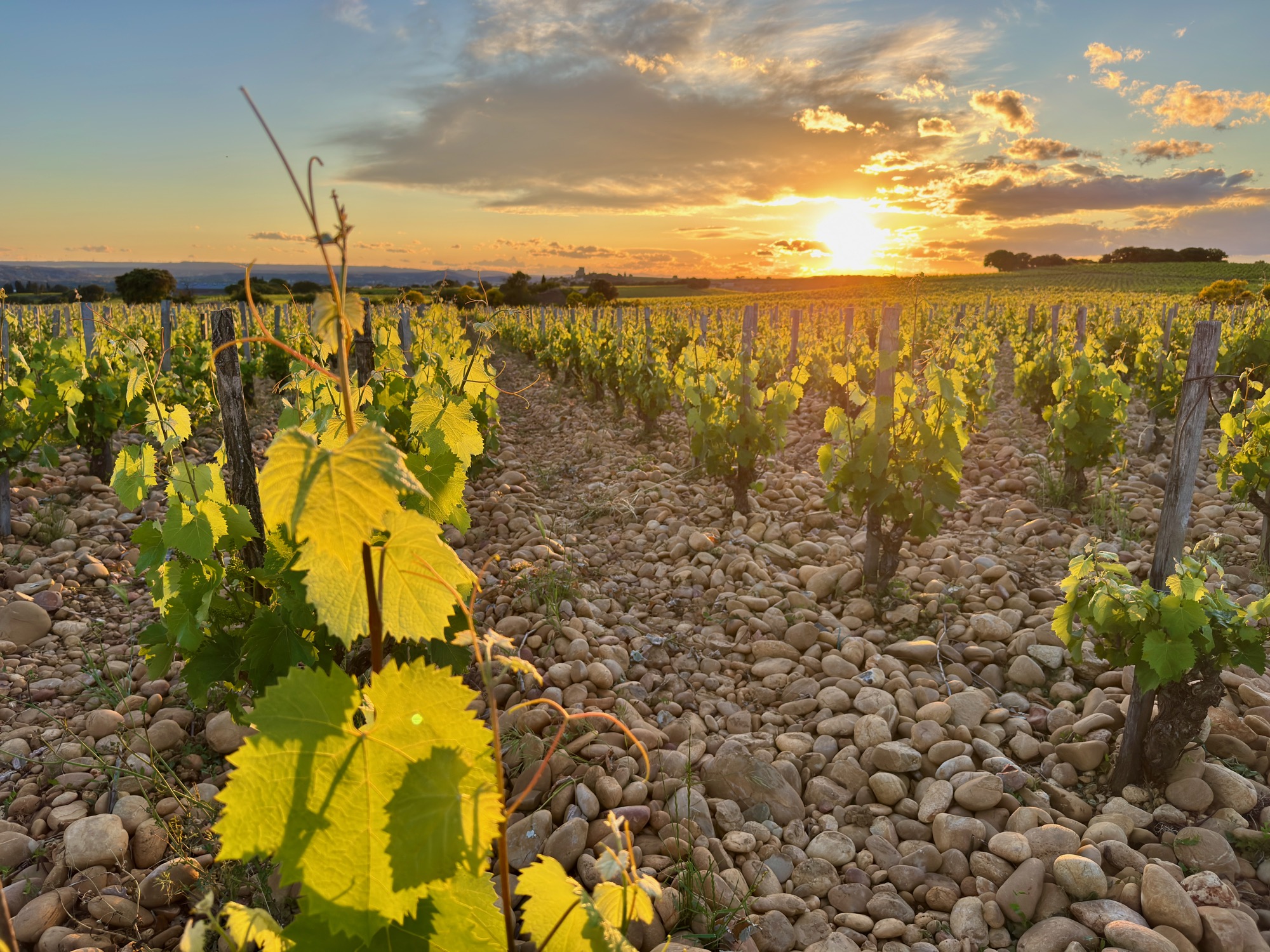


Deep roots in Châteauneuf-du-Pape
A history that began
more than 700 years ago
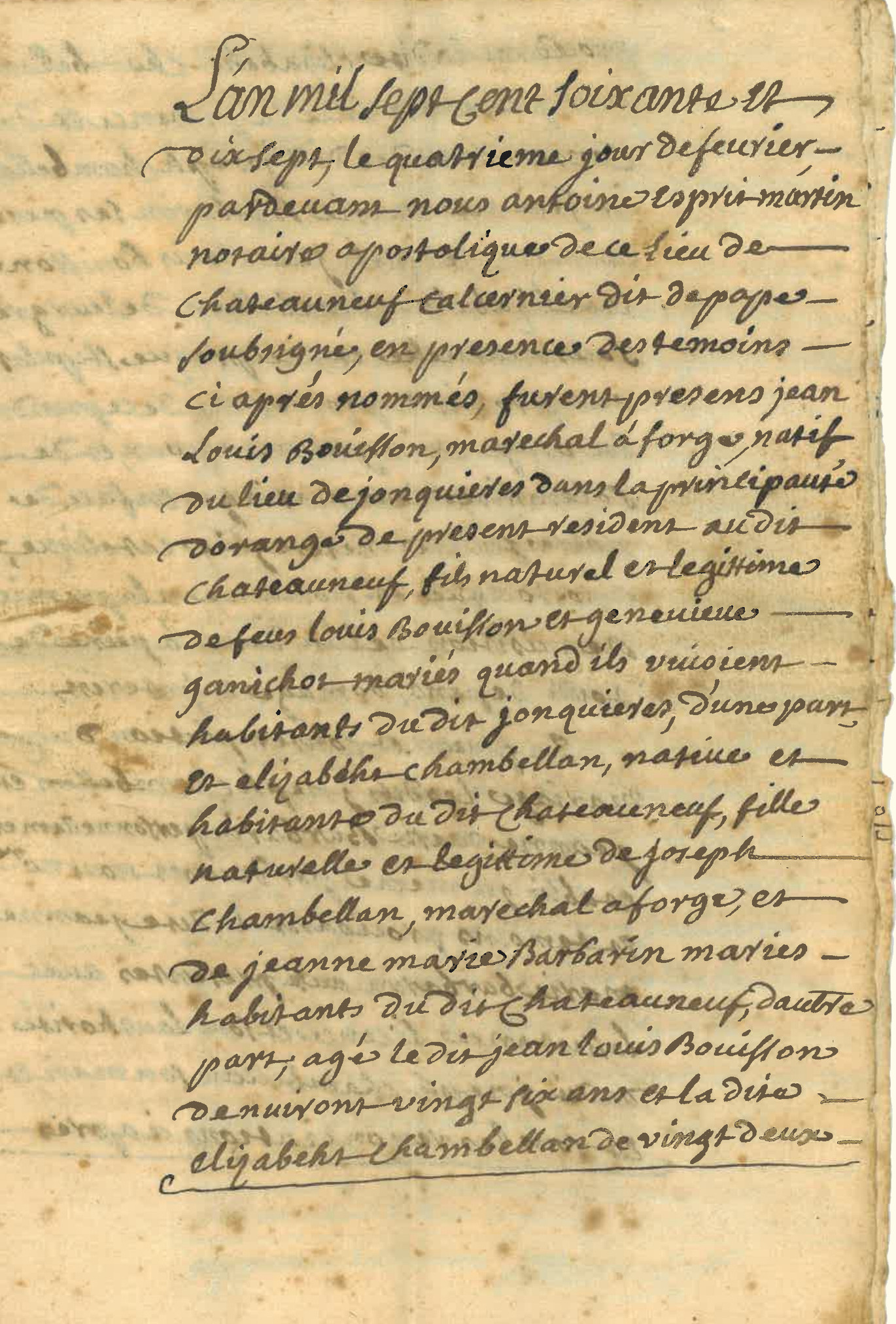
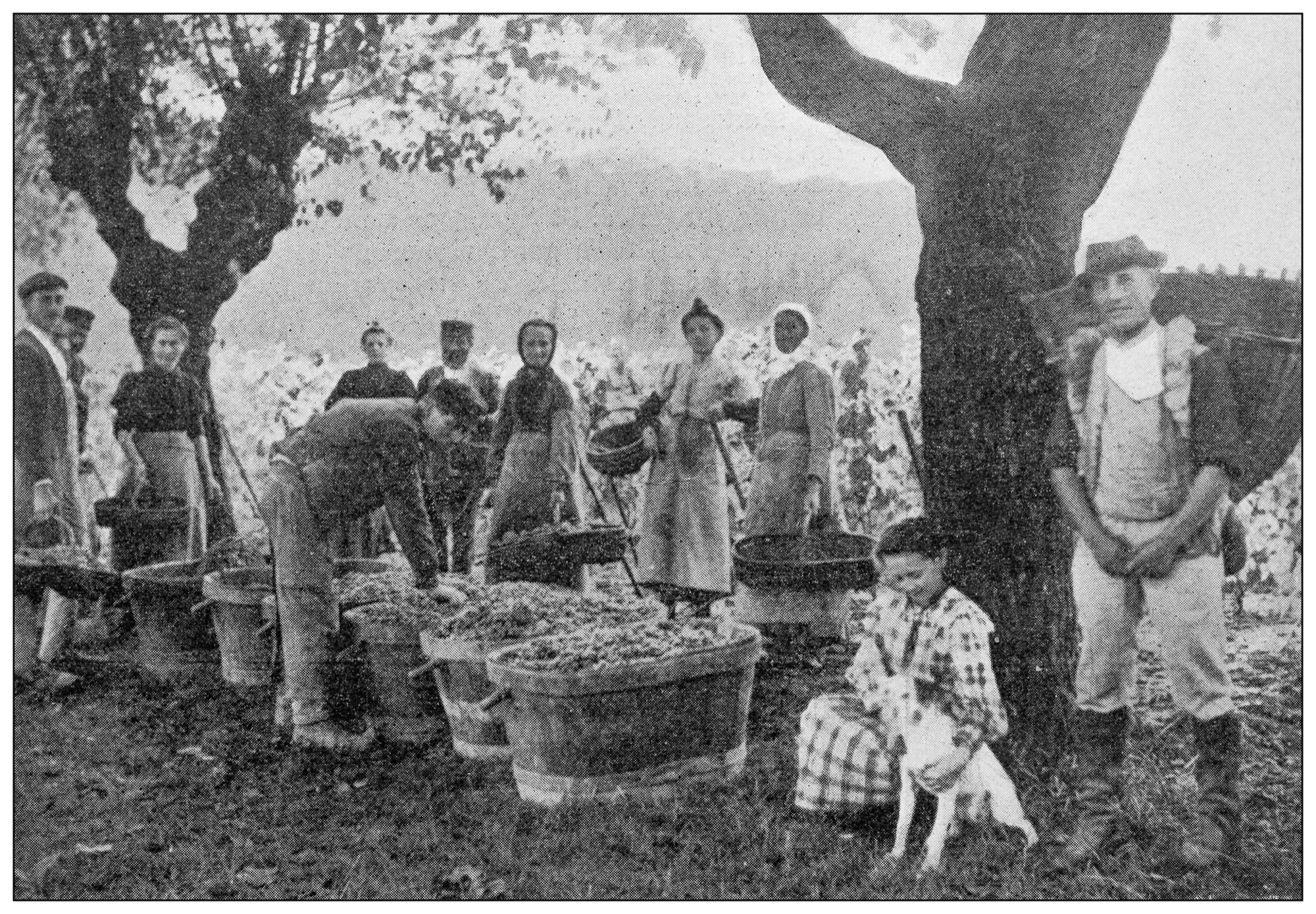
Documents dating back to the 1300s attest to the presence of the ancestors of the Boisson family in the village of Châteauneuf-du-Pape. The marriage on January 4, 1777, between Jean-Louis Boisson and Elisabeth Chambellan, both born to parents who were both winegrowers and blacksmiths, marks the true beginning of the domain's history.
- —1300s ancestors present in Châteauneuf-du-Pape
- —1777 founding marriage Boisson / Chambellan
- —Double tradition: winegrowers and blacksmiths
When the second profession becomes a signature
The origin of the name “Père Caboche”
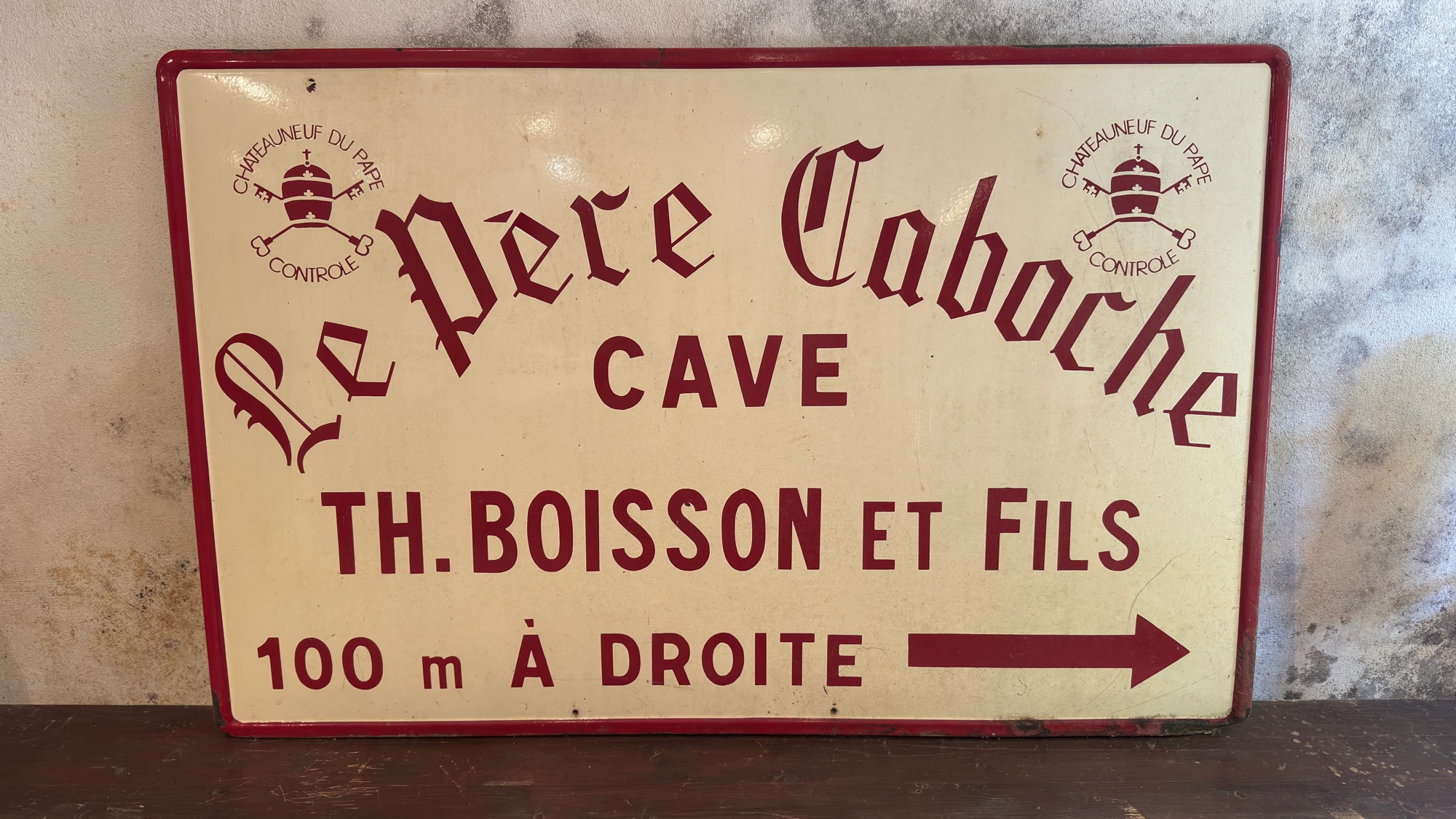
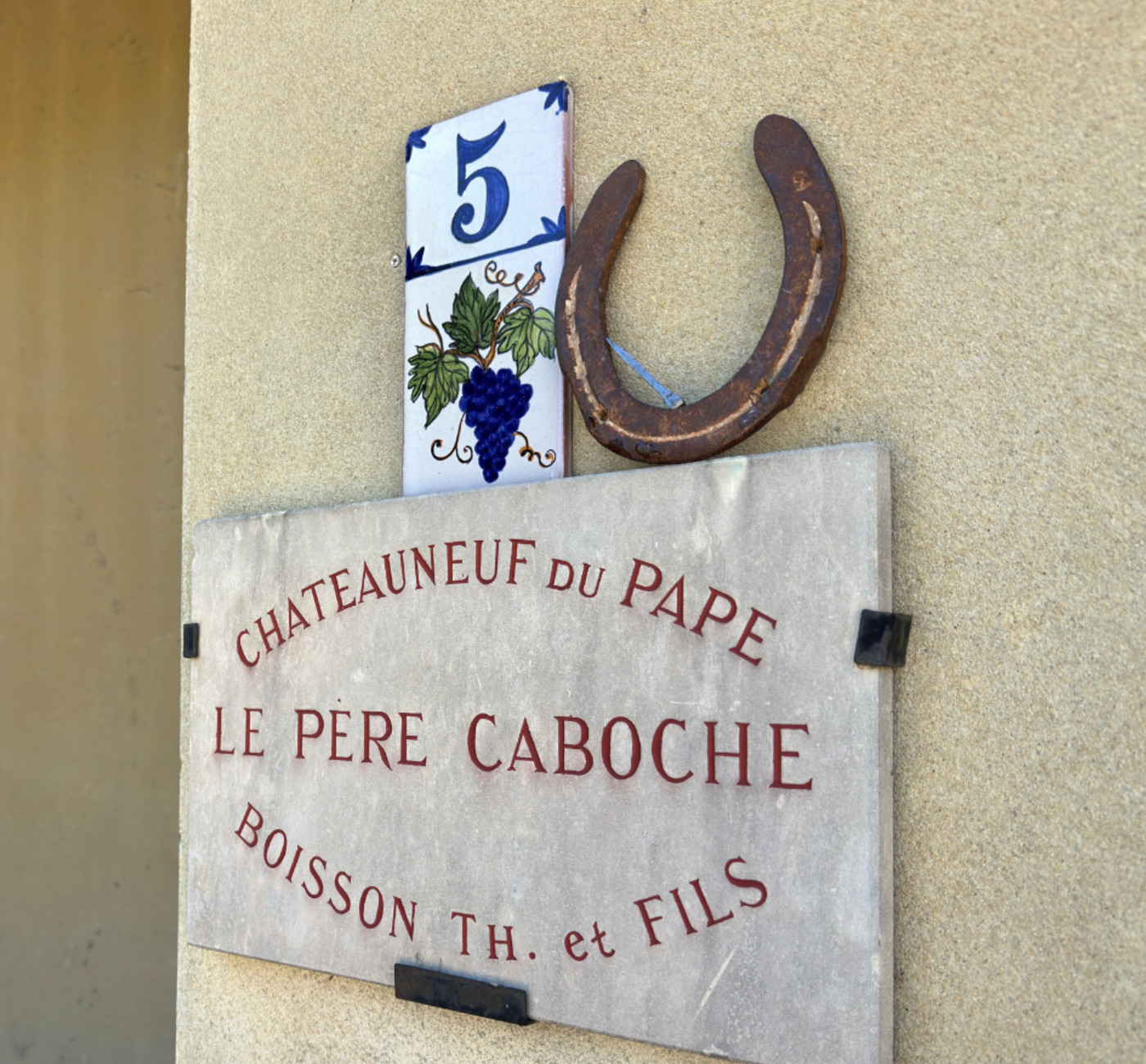
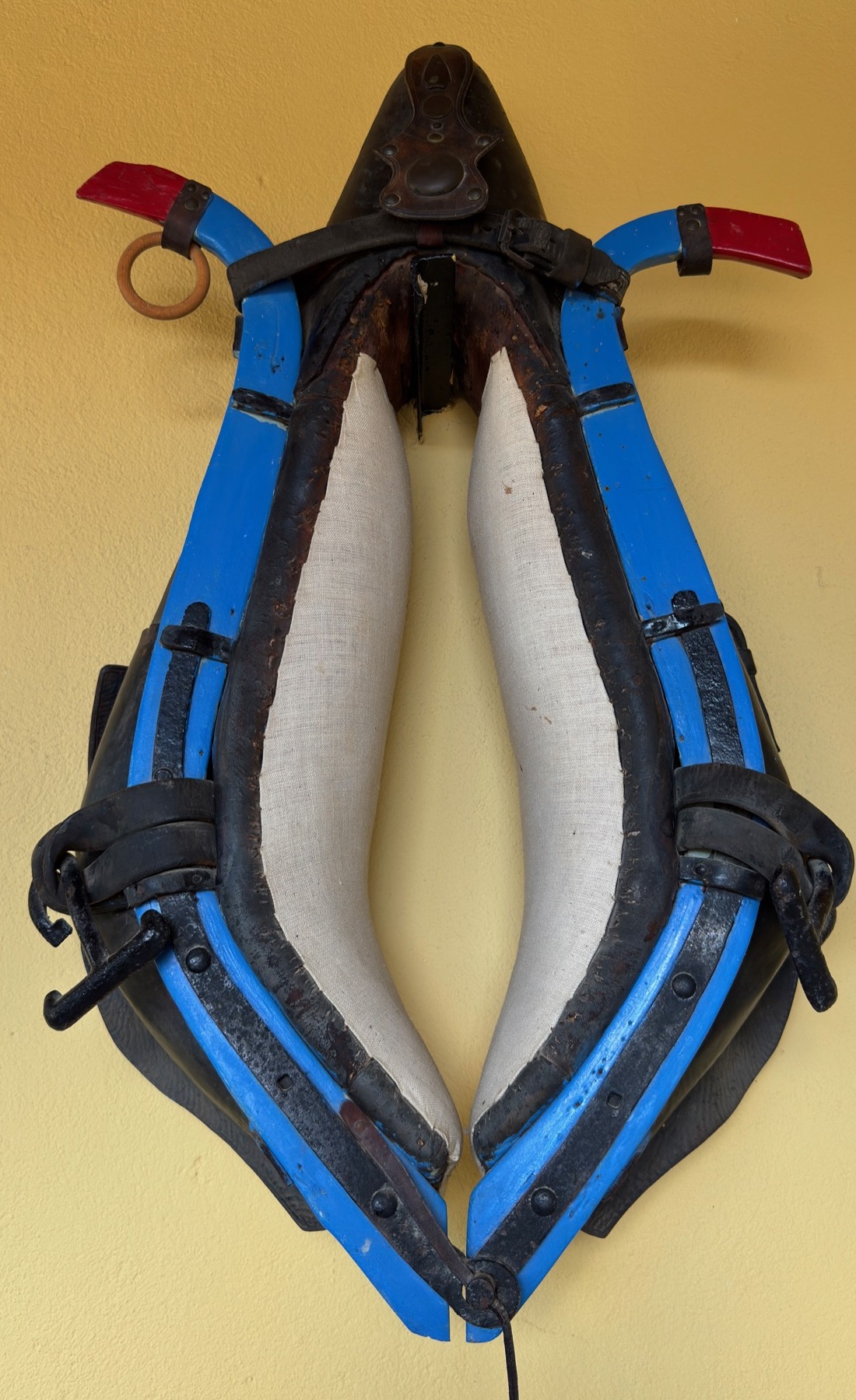
The domain owes its name to the ancestors' second profession, that of blacksmith. The nails fixing the horseshoes under the horses' hooves are called “caboche” in the Provençal language. This was the nickname given to the Boisson family at the time. This is how the first bottles bearing the name Domaine du Père Caboche appeared.
- —“Caboche” = horseshoe nail in Provençal
- —Family nickname turned into a brand
- —Colloquial meaning: persevering, slightly stubborn
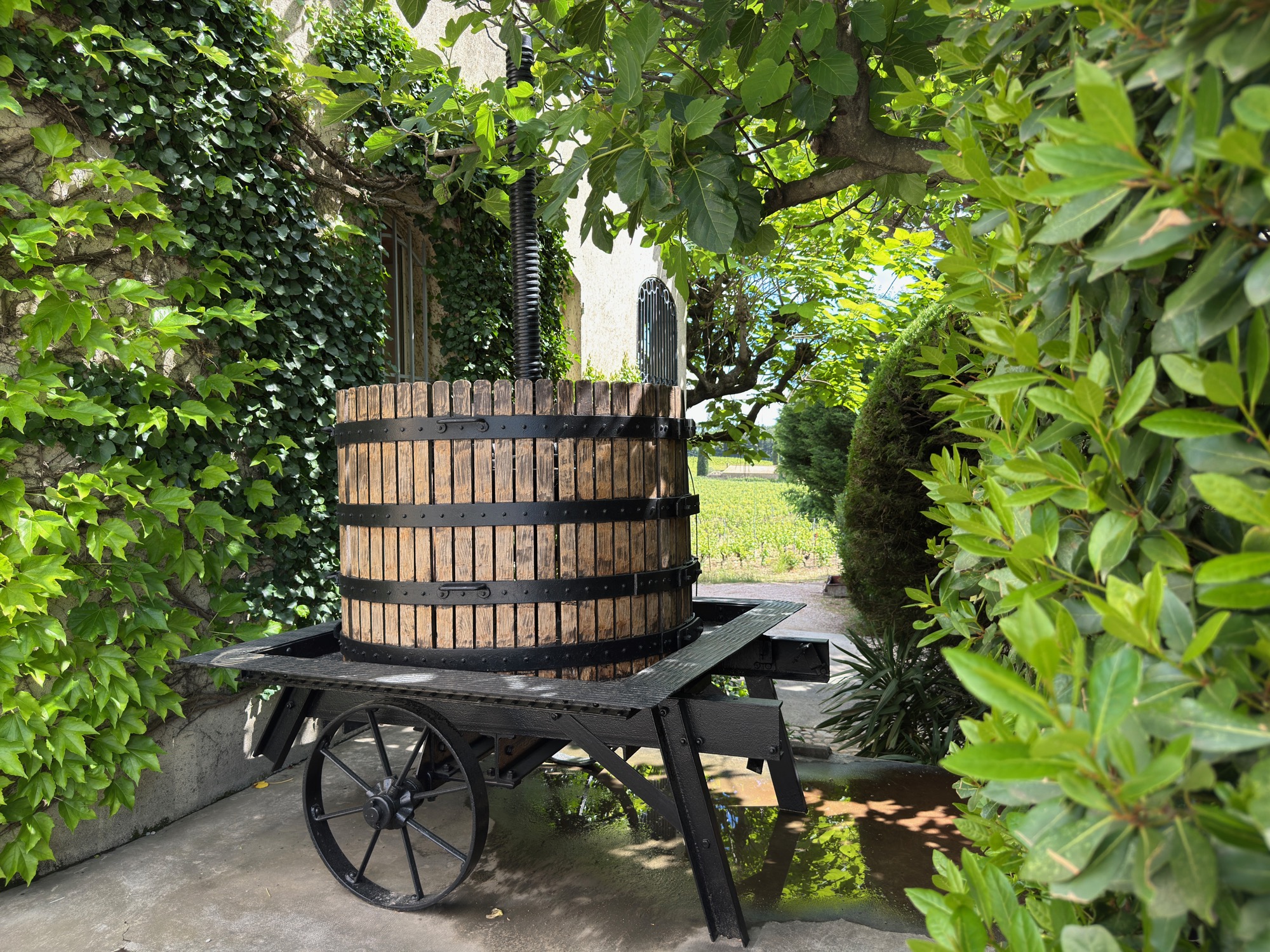
An uninterrupted transmission from father to children
The family tree
From Jean-Louis Boisson to Emilie Boisson, a continuous line of winemakers.
- 1777Jean-Louis Boisson & Elisabeth Chambellan
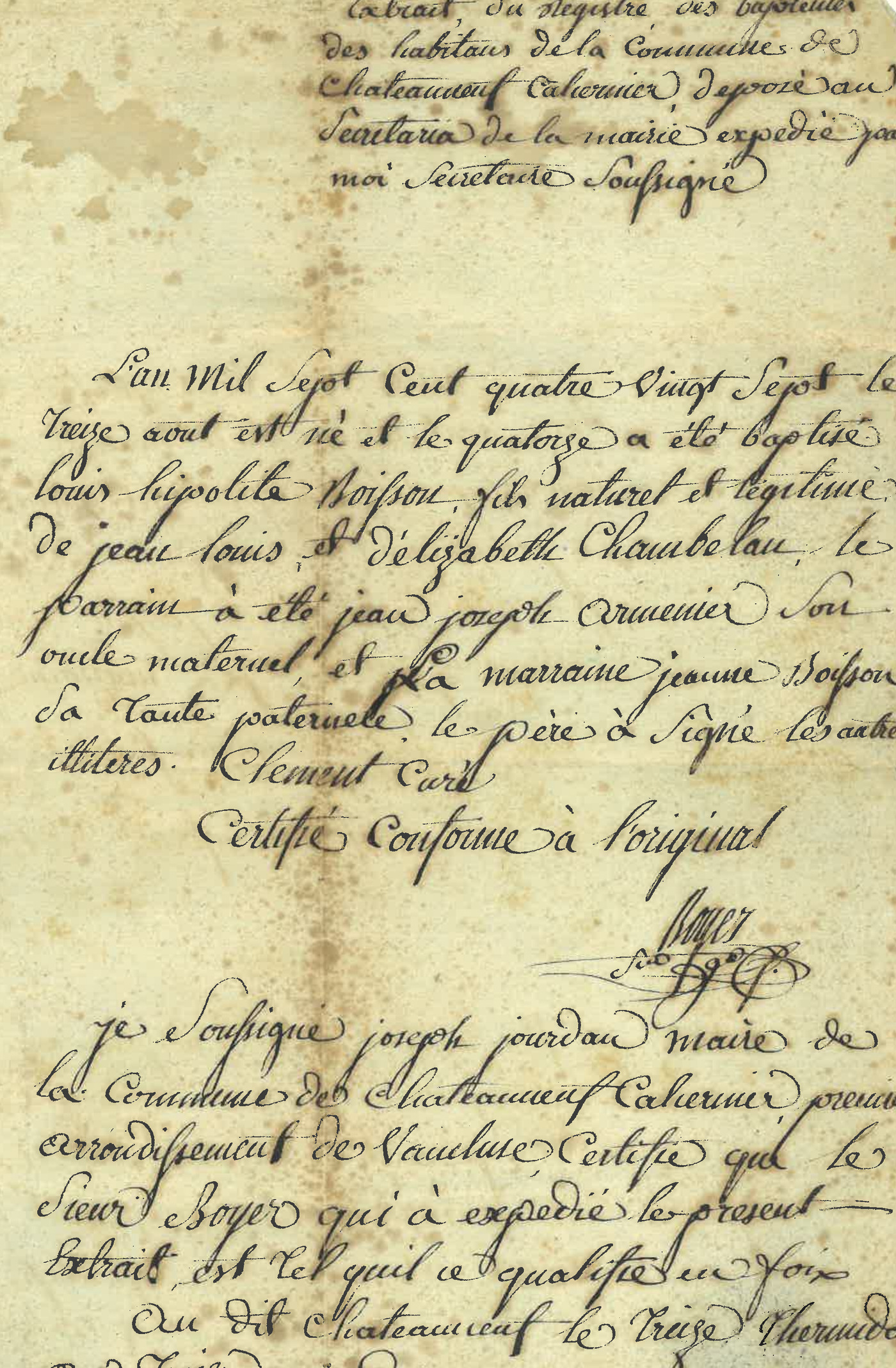
- 1787Louis Hippolyte
- 1905Théophile Boisson
- 1944Jean-Pierre Boisson
- TodayEmilie Boisson, 7th generation
Chronological timeline
Key dates of the Domaine
- 19063 hectares planted on La Crau : today's Elisabeth Chambellan cuvée
- 1972Jean-Pierre Boisson takes over the Domaine at 28 years old and develops bottle sales
- 1981Initiator of the 1st Vinexpo, beginning of export
- 2005Emilie Boisson joins the Domaine after her studies
- 2016Emilie takes the reins of the Domaine
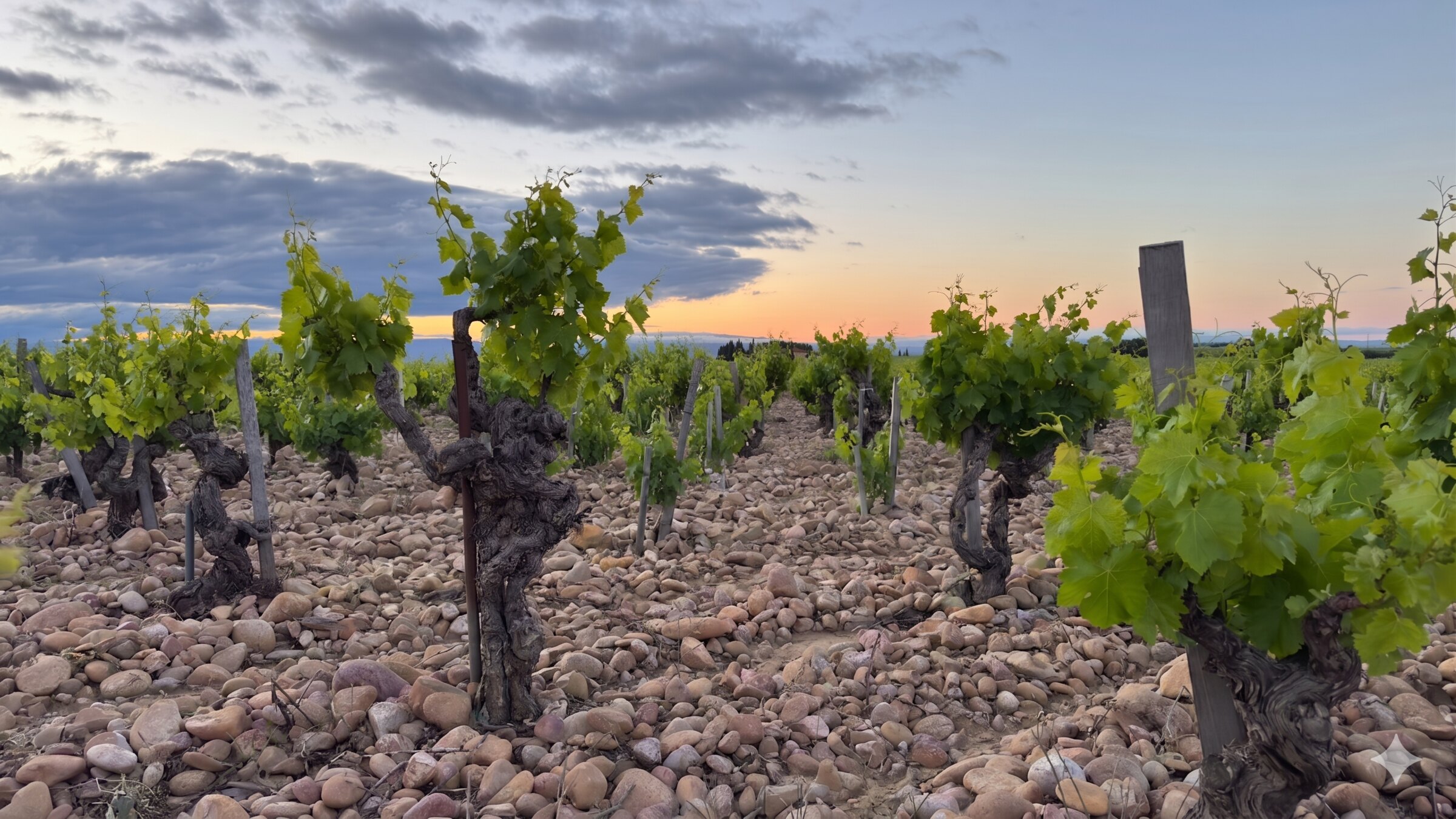
1906
A vine planted for a child. On these plots, 120 years later,
the 13 grape varieties of the appellation are still harvested.
- —Planted for the birth of Théophile Boisson
- —3 hectares on the “La Crau” plateau
- —Still in production 120 years later
- —A vine, a heritage, a name
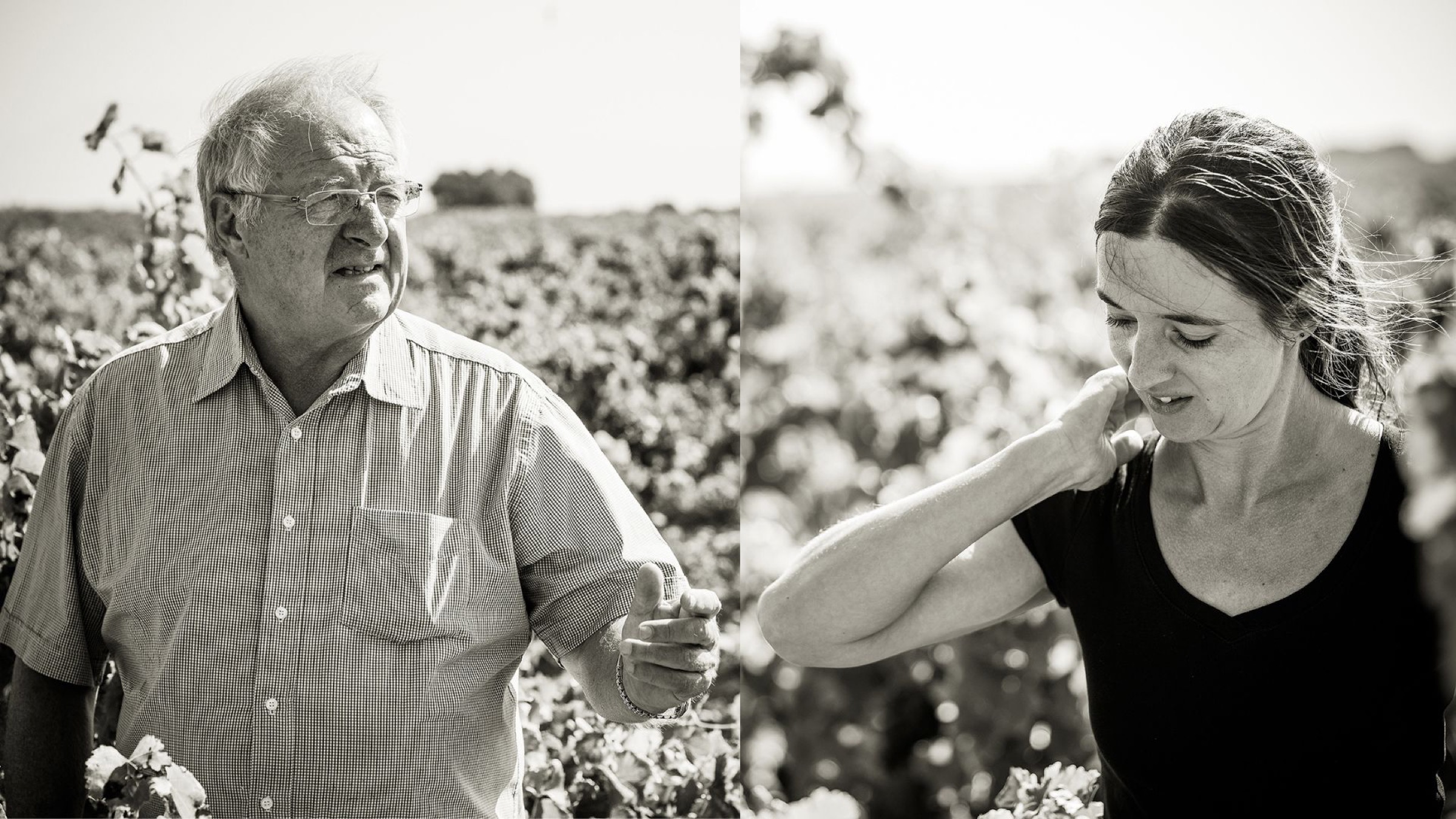 Jean-Pierre BoissonEmilie Boisson
Meeting the 7th generation
Emilie and the Boisson family
What my father passed on to me.From my family, I received more than hectares of land. I received a philosophy. In 1972, at the age of 28, my father, Jean-Pierre Boisson, took over the estate with 15 hectares. Fifty years later, we cultivate 74 hectares. He never stopped innovating: gravity vinification, the presidency of the Châteauneuf-du-Pape Wine Federation, bringing the appellation to Vinexpo as early as 1981, betting on exports. He taught me tenacity, business acumen, and that one must never stand still.
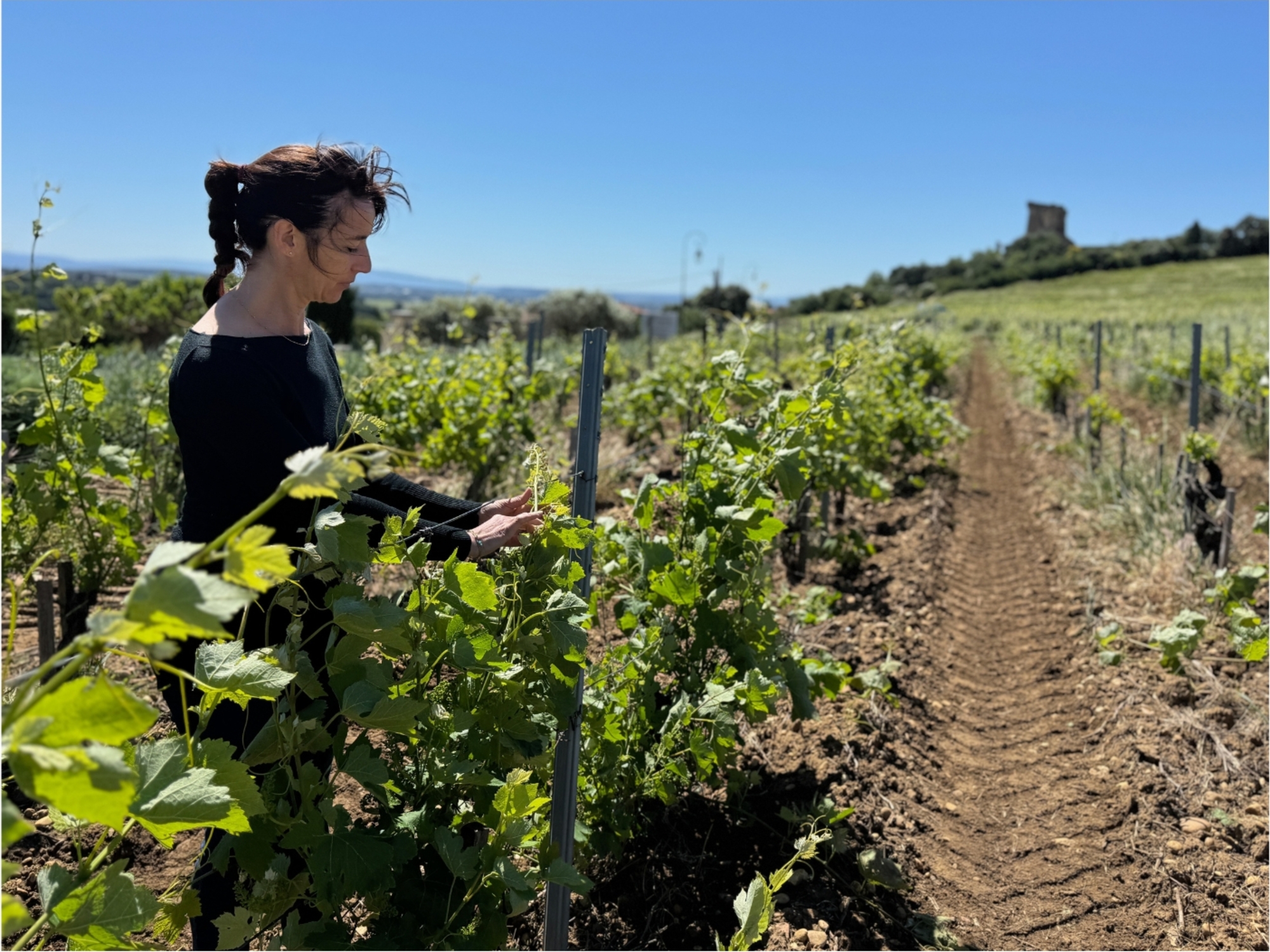
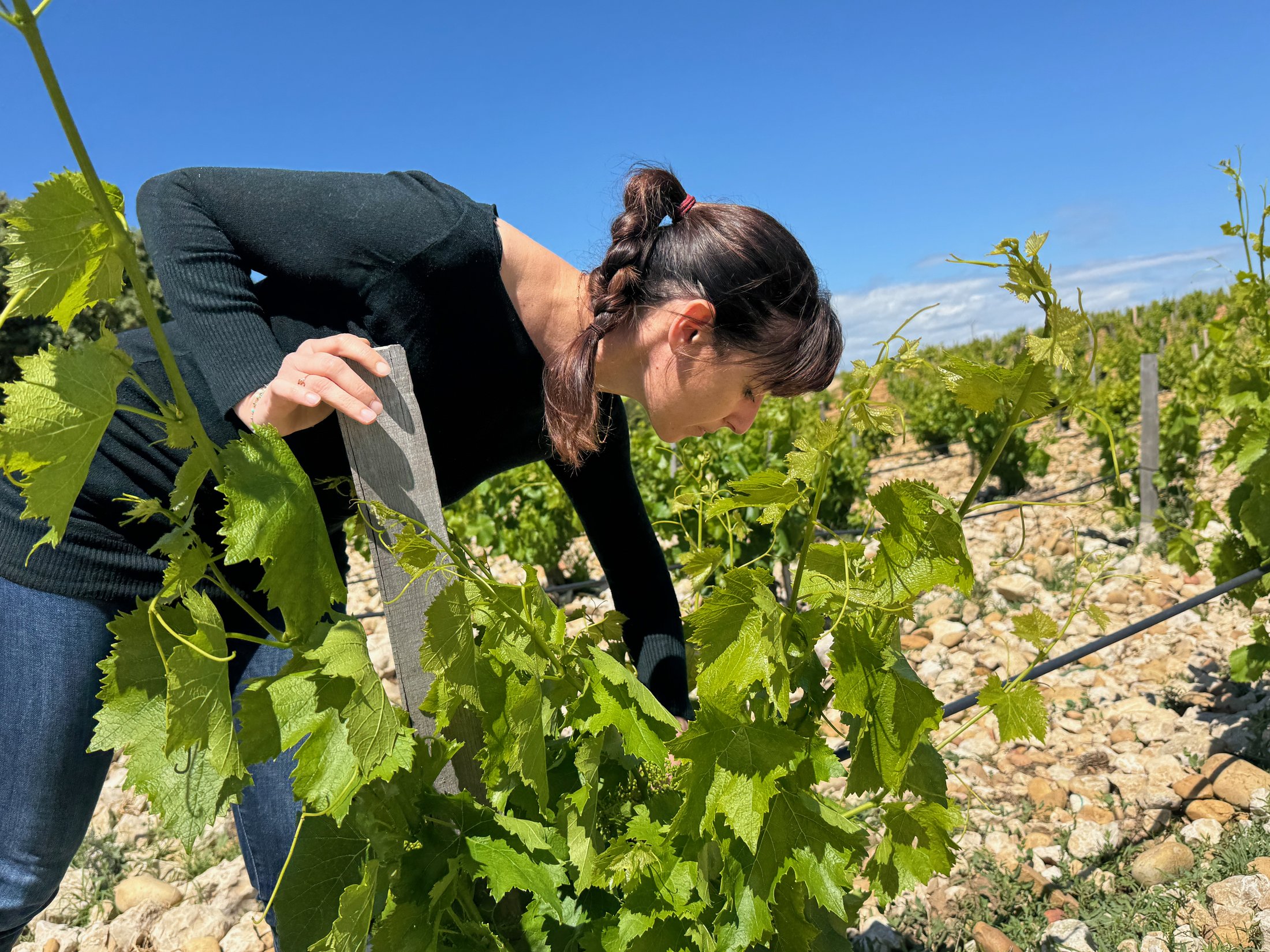
What I carry forward today.My winemaking signature. I seek freshness, fruit, length, finesse and elegance. I work with the soil and the climate. No herbicides. Organic fertilizers based on microbiological analyses. Not because it is trendy, but out of the conviction that a vineyard is not something you own; it is something you pass on.
What I will leave behind.A living soil. A vineyard full of vigour. A winery that respects the raw material. And the same thing my father left me: a love for a job well done, humility, and the pride of still being here. And a fierce determination to keep passing it on.
The Père Caboche Manifesto
Our philosophy in five sentences
We believe that greatness comes from perseverance.
Seven centuries have taught us this.
We believe that the vine is transmitted more than it is owned.
Seven generations bear witness to this.
We believe that elegance is better than strength.
Our style is the expression of this.
We believe that a great wine should be accessible to everyone enlightened amateurs and novices alike.
Our generosity confirms this.
We believe that discretion is better than popularity.
Châteauneuf-du-Pape, mythical village of the Rhône Valley
In the heart of Provence
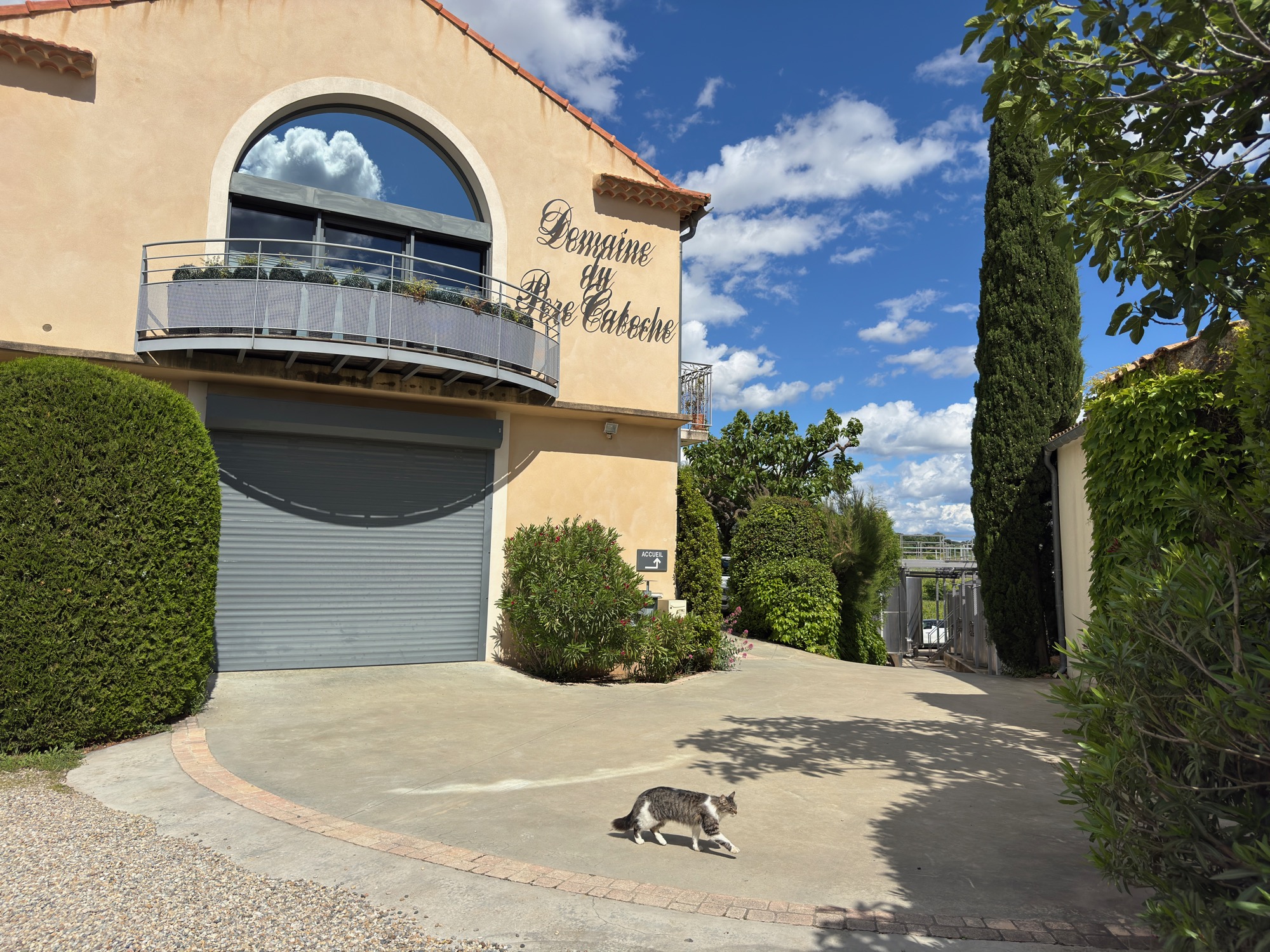
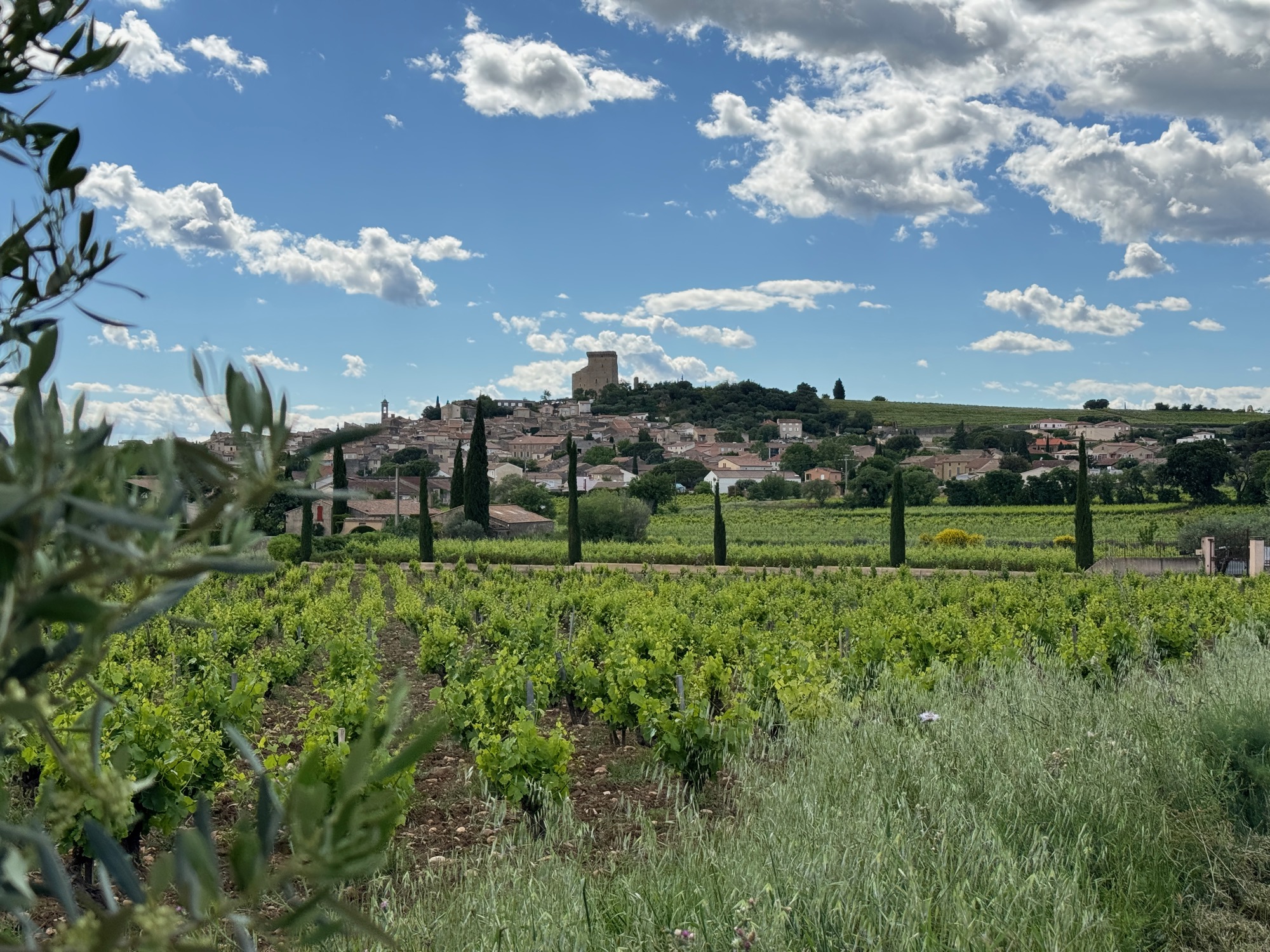
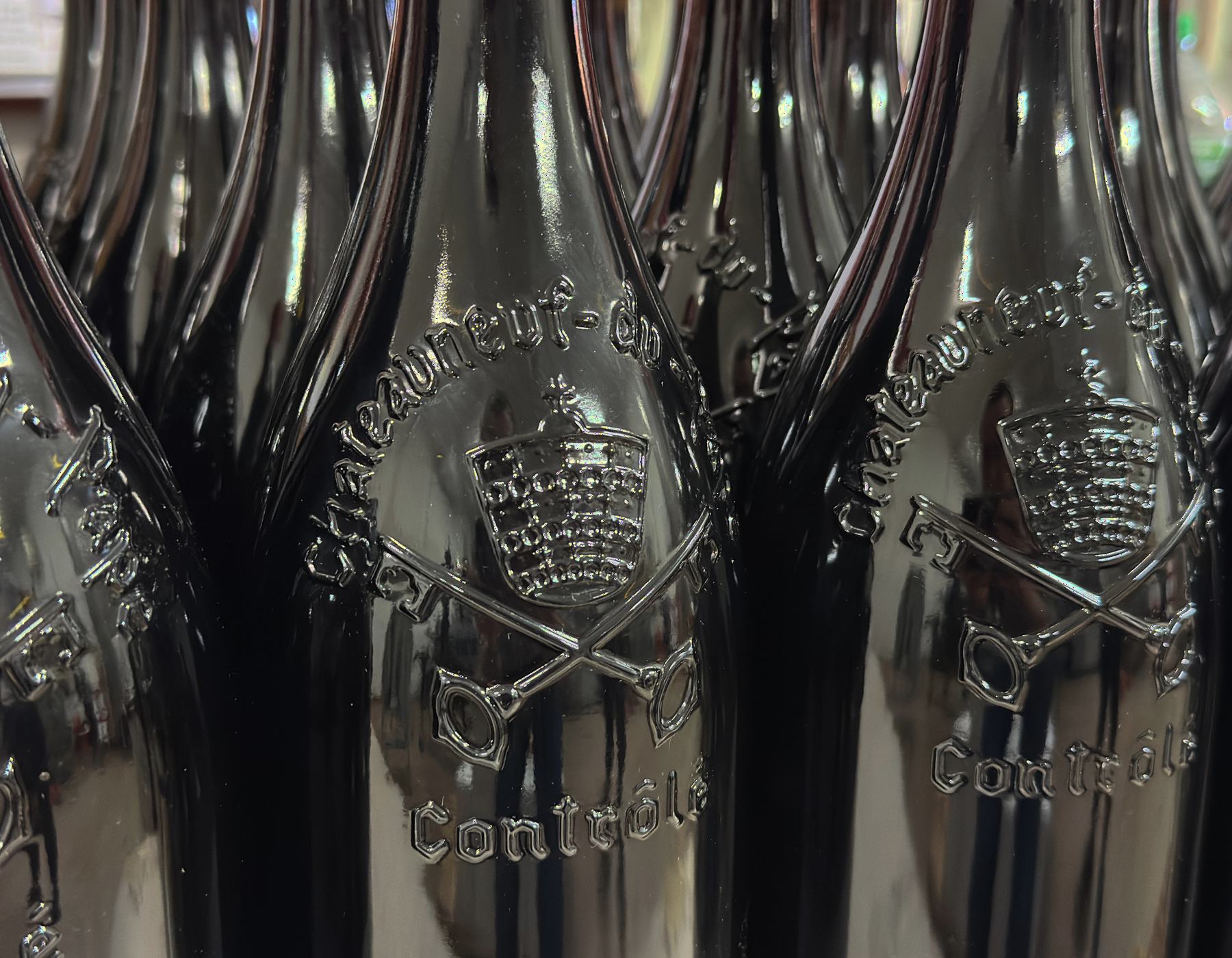
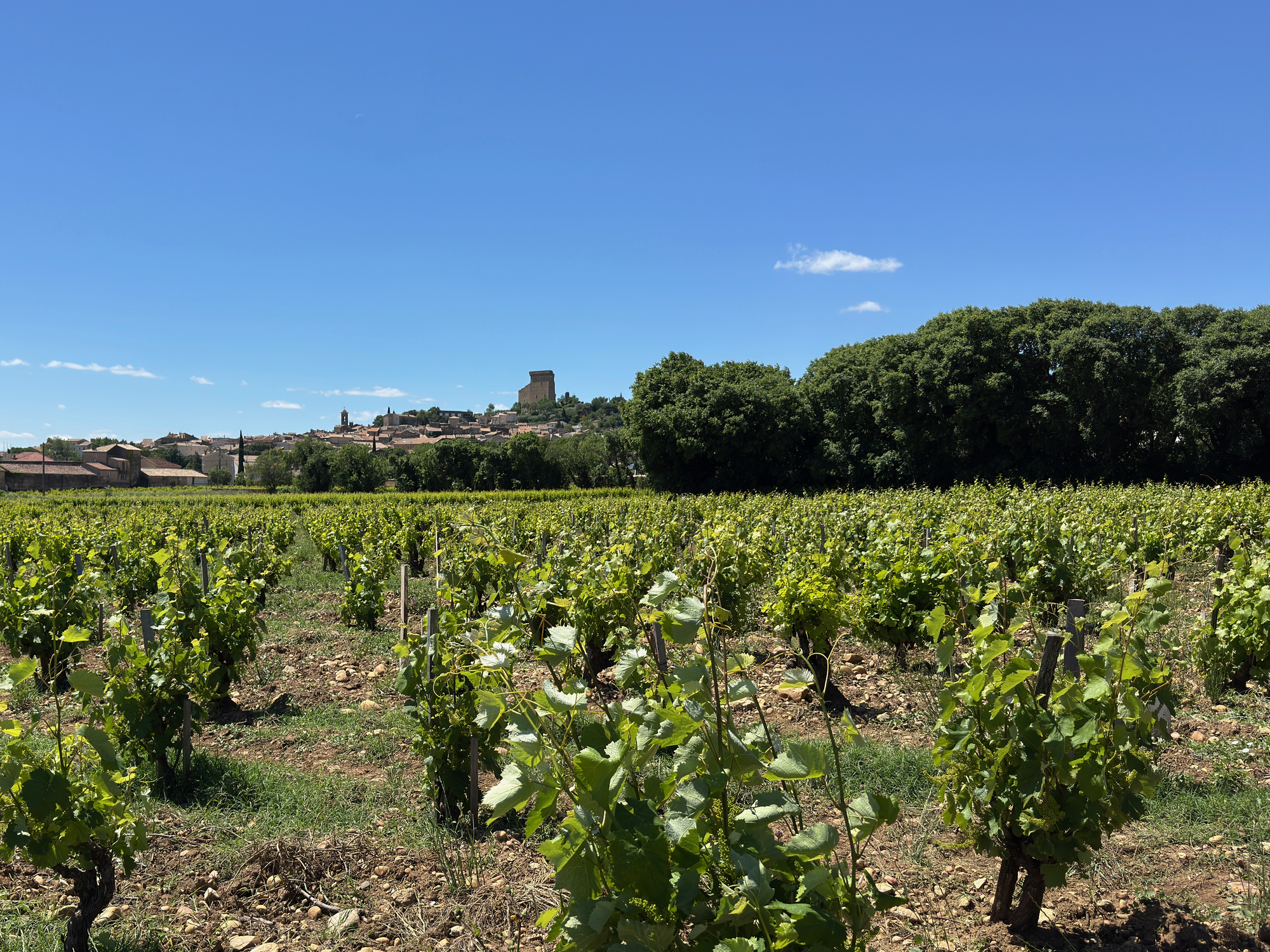
Domaine du Père Caboche is located in the village of Châteauneuf-du-Pape, in the heart of Provence. The Popes of Avignon built their summer residence here in the 14th century, making the village and its vineyard famous.
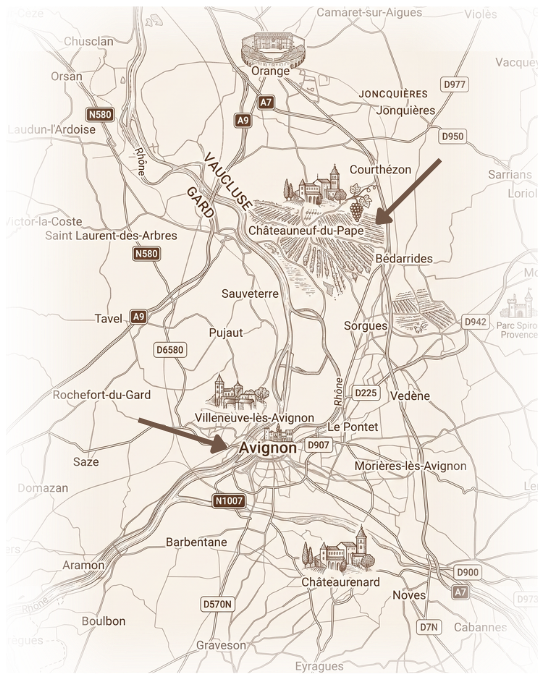
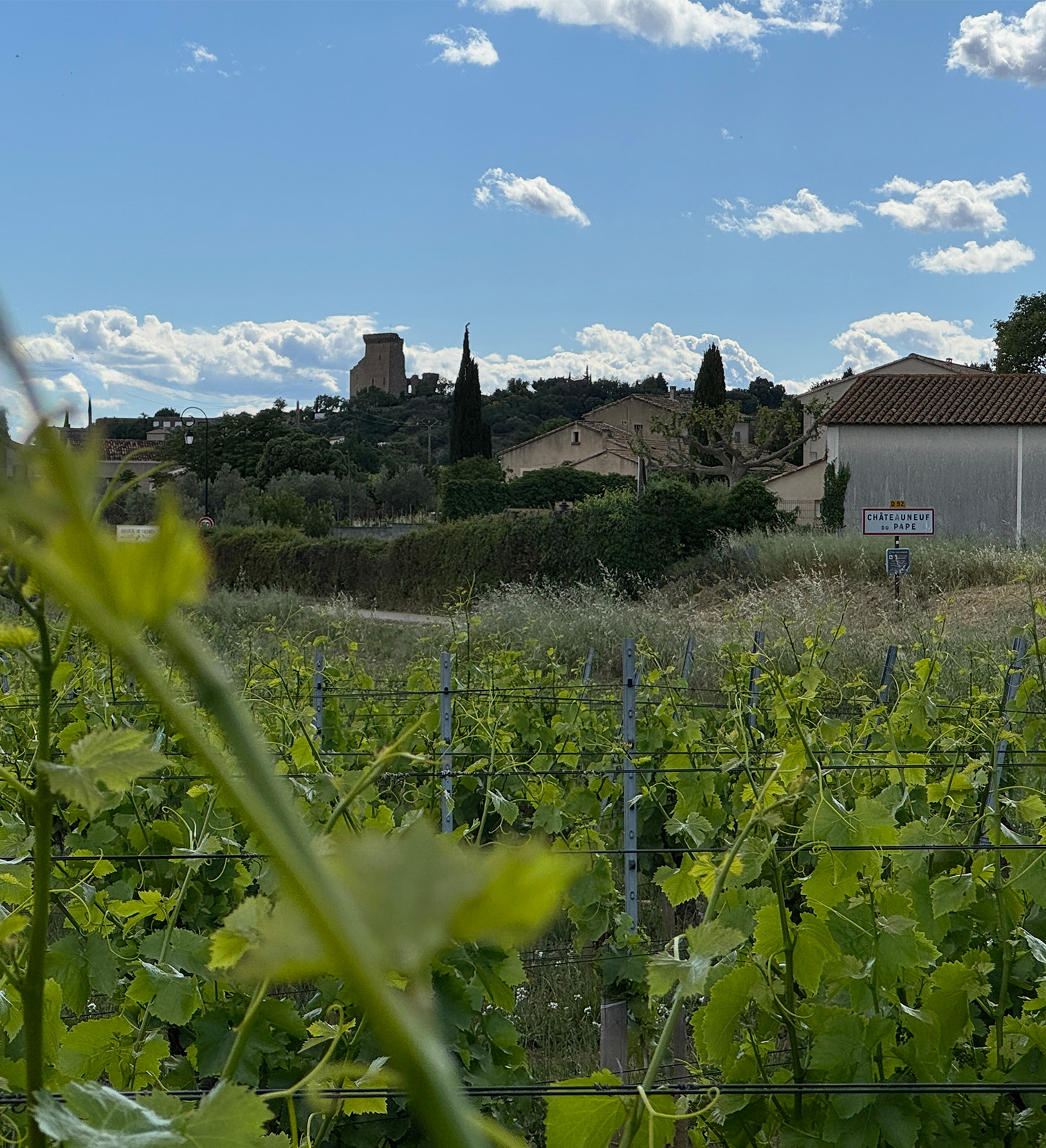
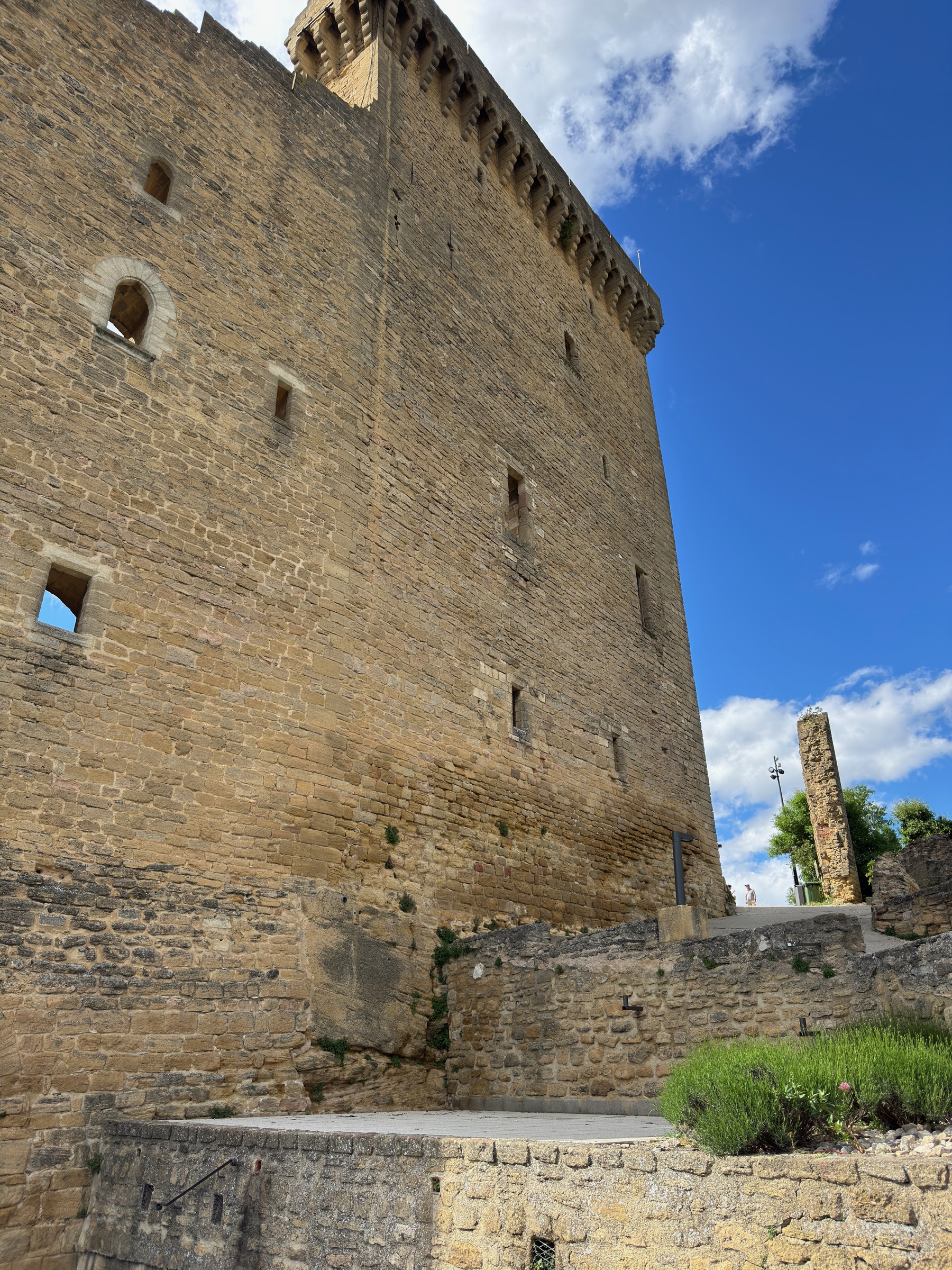
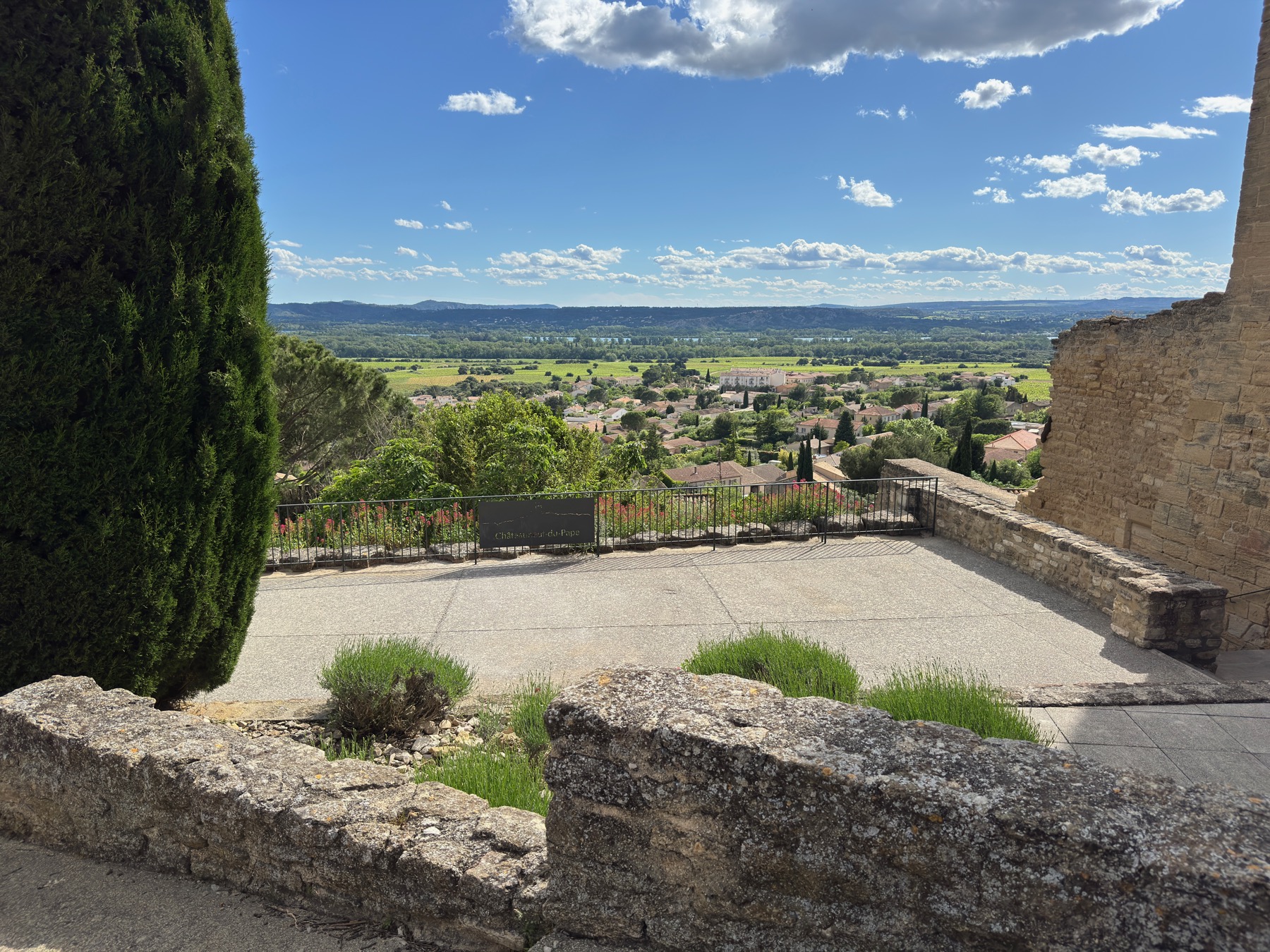
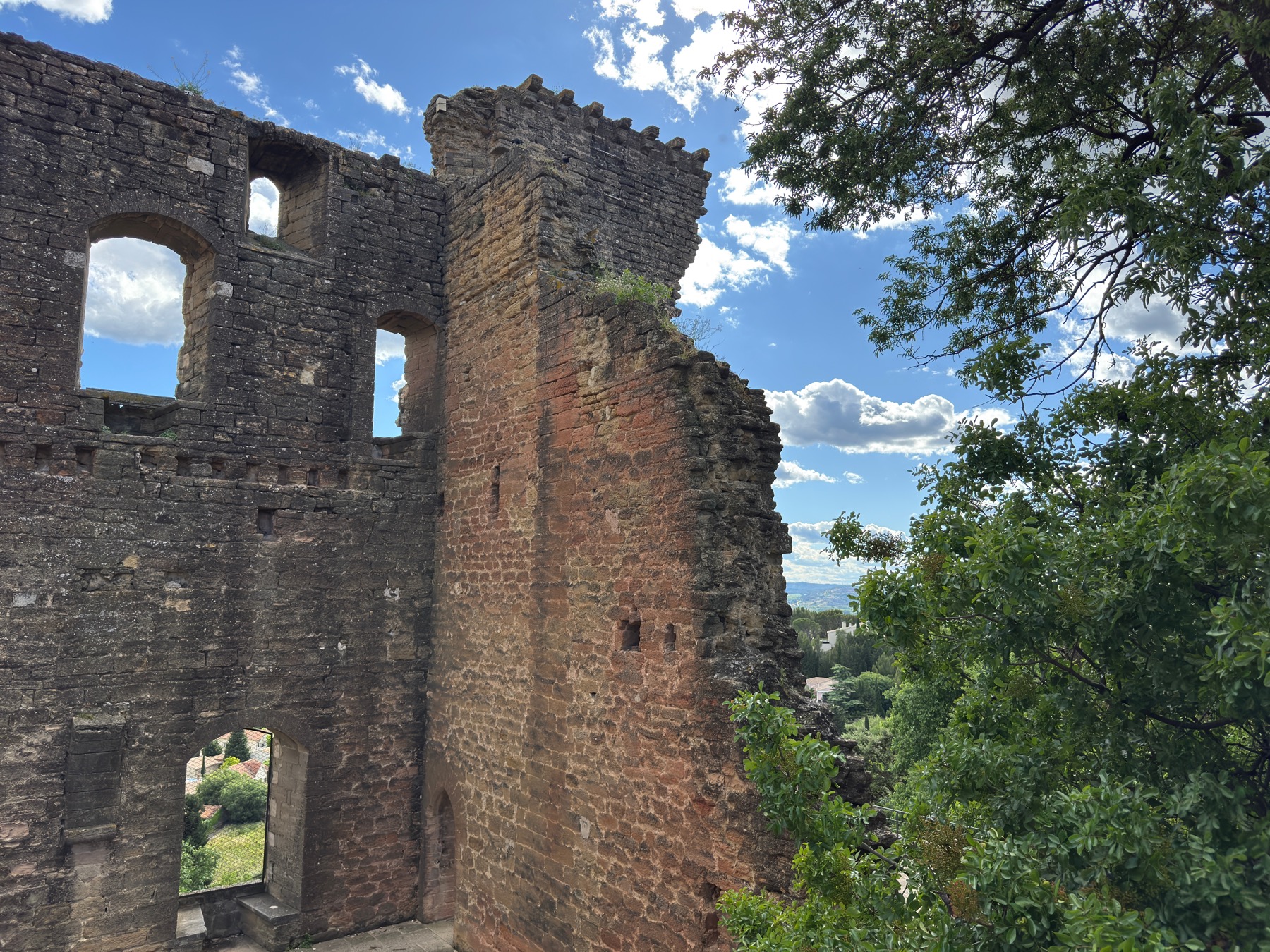
Why is Châteauneuf-du-Pape so famous?

Three appellations, the same high standards
74 hectares of family property
Domaine du Père Caboche's vineyard grows 74 hectares,
100% owned by the Boisson family.
- —31 hectares in AOC Châteauneuf-du-Pape including 17 hectares on “La Crau”
- —21 hectares in AOC Côtes du Rhône
- —22 hectares in IGP Vaucluse with unusual grape varieties
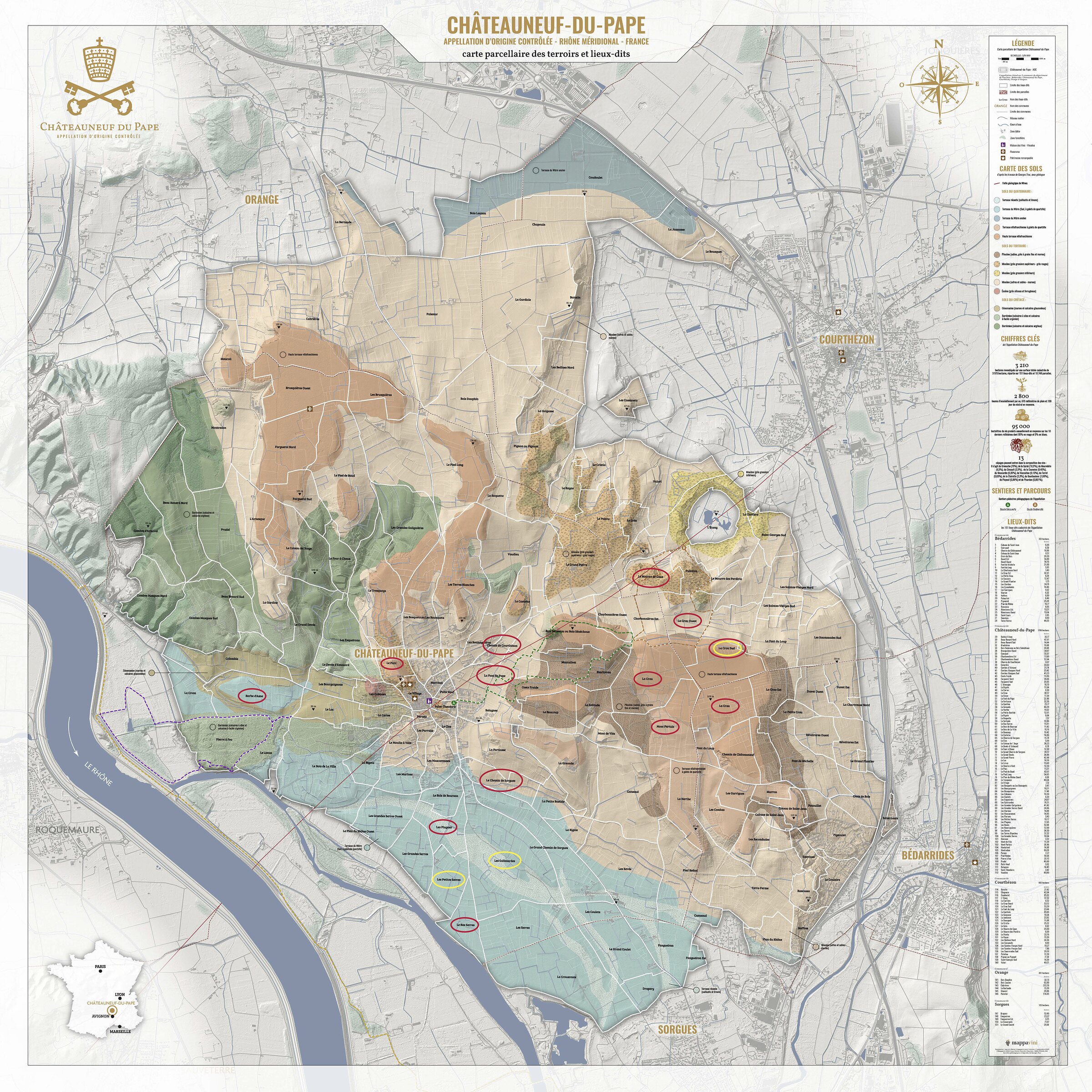
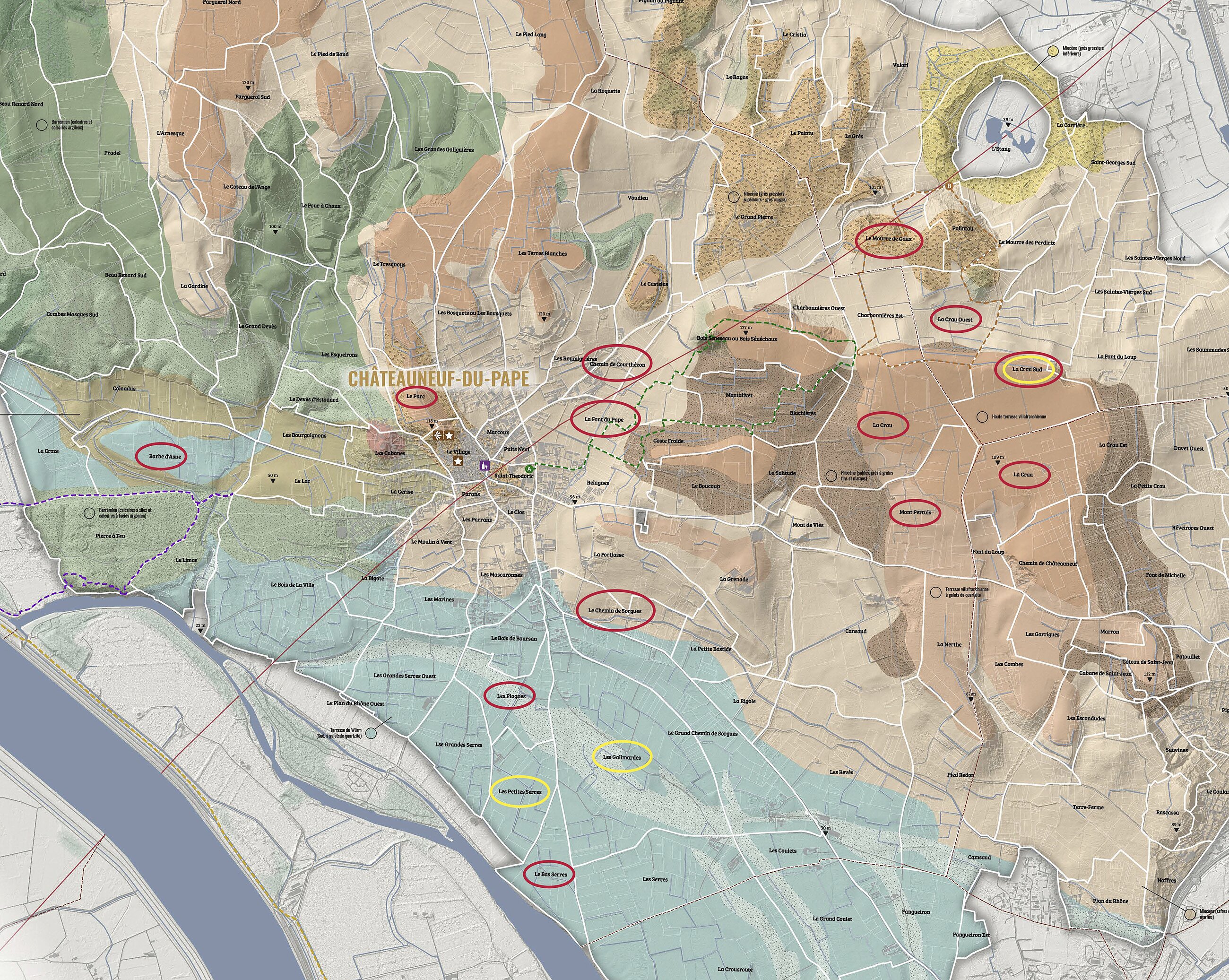
Across the four terroirs of the appellation
Our vineyard in Châteauneuf-du-Pape
Our 31 hectares in AOC Châteauneuf-du-Pape are spread over several prestigious localities of the appellation. Our 14 vineyard plots are located on the four main terroirs of the appellation.
Our flagship plot 17 hectares on the legendary plateau
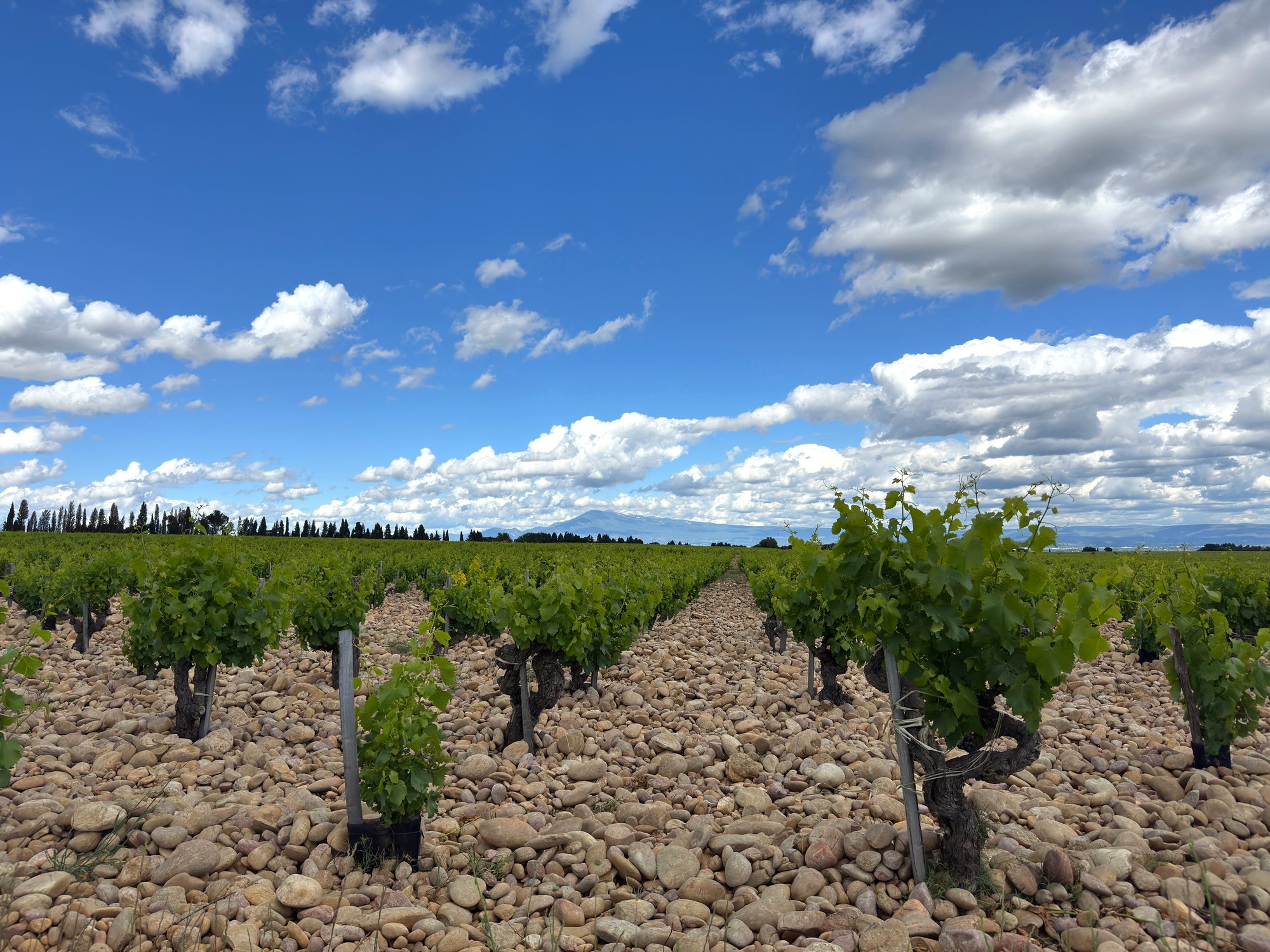
The “La Crau” terroir
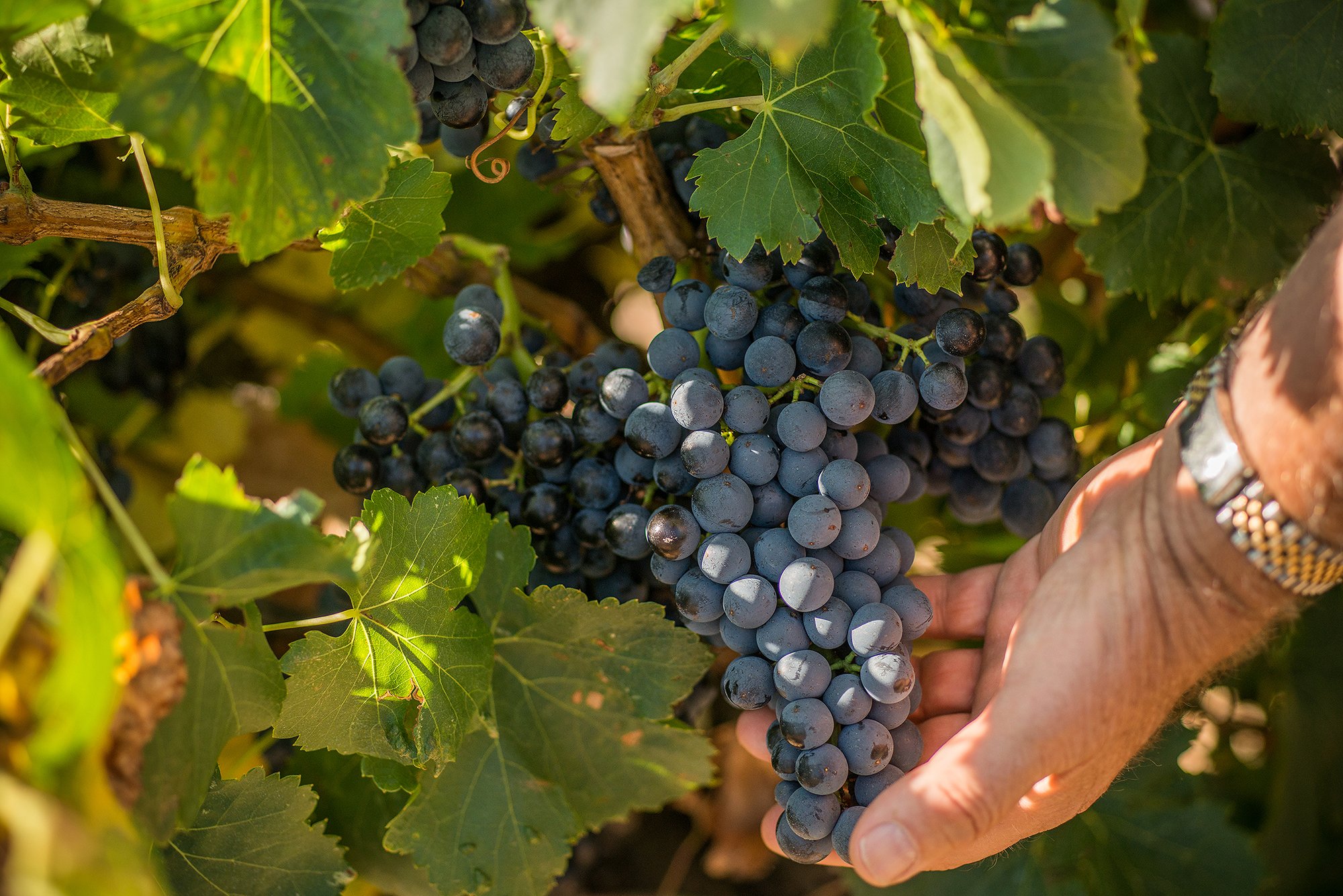
“La Crau” is one of the largest and most famous terroirs of the appellation, the land of choice for Grenache. Resting on a red clay subsoil where vine roots go down up to 3 meters deep, it is covered with dense round pebbles torn from the Alps and polished by the tumultuous Rhône, that absorb the sun's heat during the day to release it to the vines at night.
Beyond certification, a fundamental approach
Our environmental commitment

Our vision for the next five years is built around viticulture that respects the vine, the soil, and those who live from it.
- —In the soil zero herbicide, regenerative farming, soil microbiology analyses, organic fungicides
- —In the vineyard early disbudding, leaf removal adapted to varieties and climate, hedgerow planting under consideration, electric over-the-row tractor trials
- —In the cellar from 2027 reds: cellar sorting, partial destemming, blending from vatting; whites: whole-bunch pressing, barrel ageing under consideration
Precise work, at every stage, controlled from A to Z
From the vines…
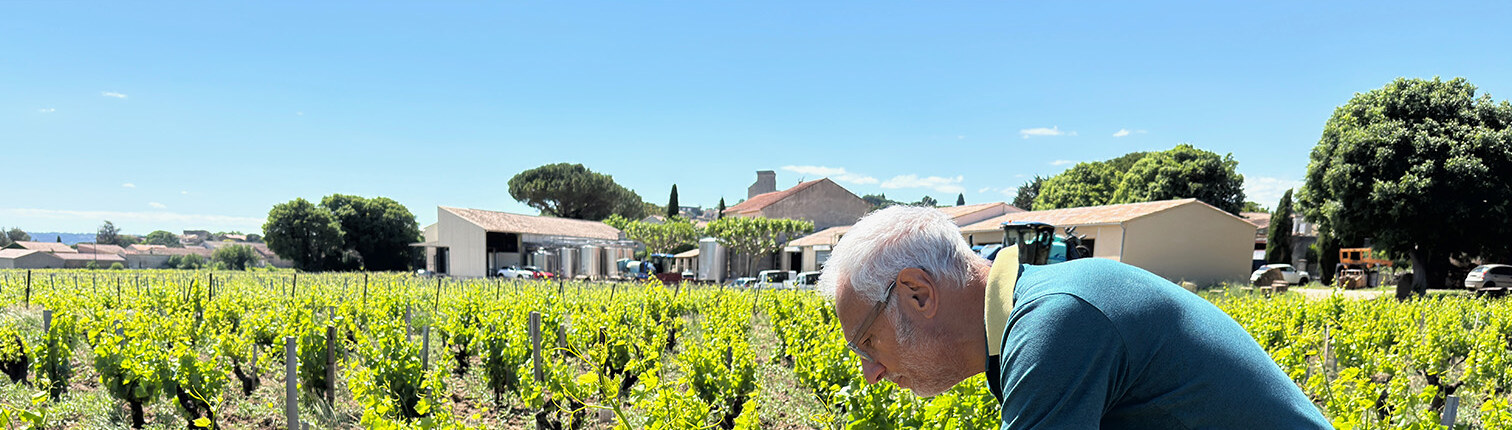
Manual harvesting for Châteauneuf-du-Pape wines.
Strict rules for Châteauneuf-du-Pape wines, severe grape sorting at the vines.
Low yield for Châteauneuf-du-Pape wines.
Gravity vinification and careful aging
…to our cellars
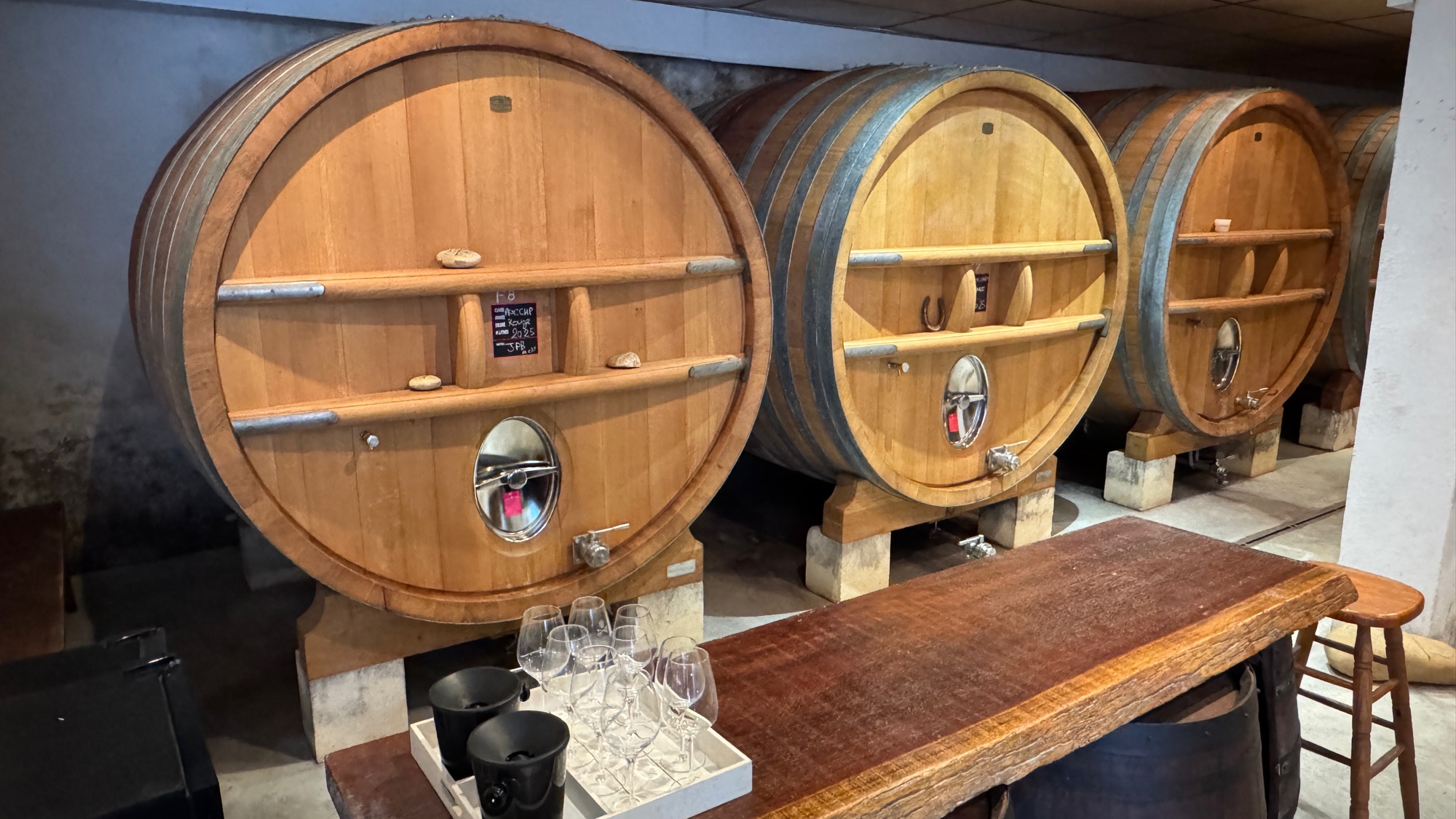
Our vinification cellar operates by gravity, allowing gentle work on the juices and Châteauneuf-du-Pape wines.
Reds
Whites & Rosés
* Châteauneuf-du-Pape wines
Our Châteauneuf-du-Pape wines are aged in oak barrels and concrete vats for 8 to 12 months. Other wines are aged in stainless vats.
The Emilie Boisson style
Our signature, our credo
Under Emilie's leadership, the Domaine's wines are characterized by aromatic freshness, elegance, volume, and length. The Boisson family's credo: our wines must remain accessible to everyone and dedicated to simple moments of sharing.
- —Style freshness, elegance, volume, length
- —Wines accessible to all
- —A discreet family we prefer the vines to public relations
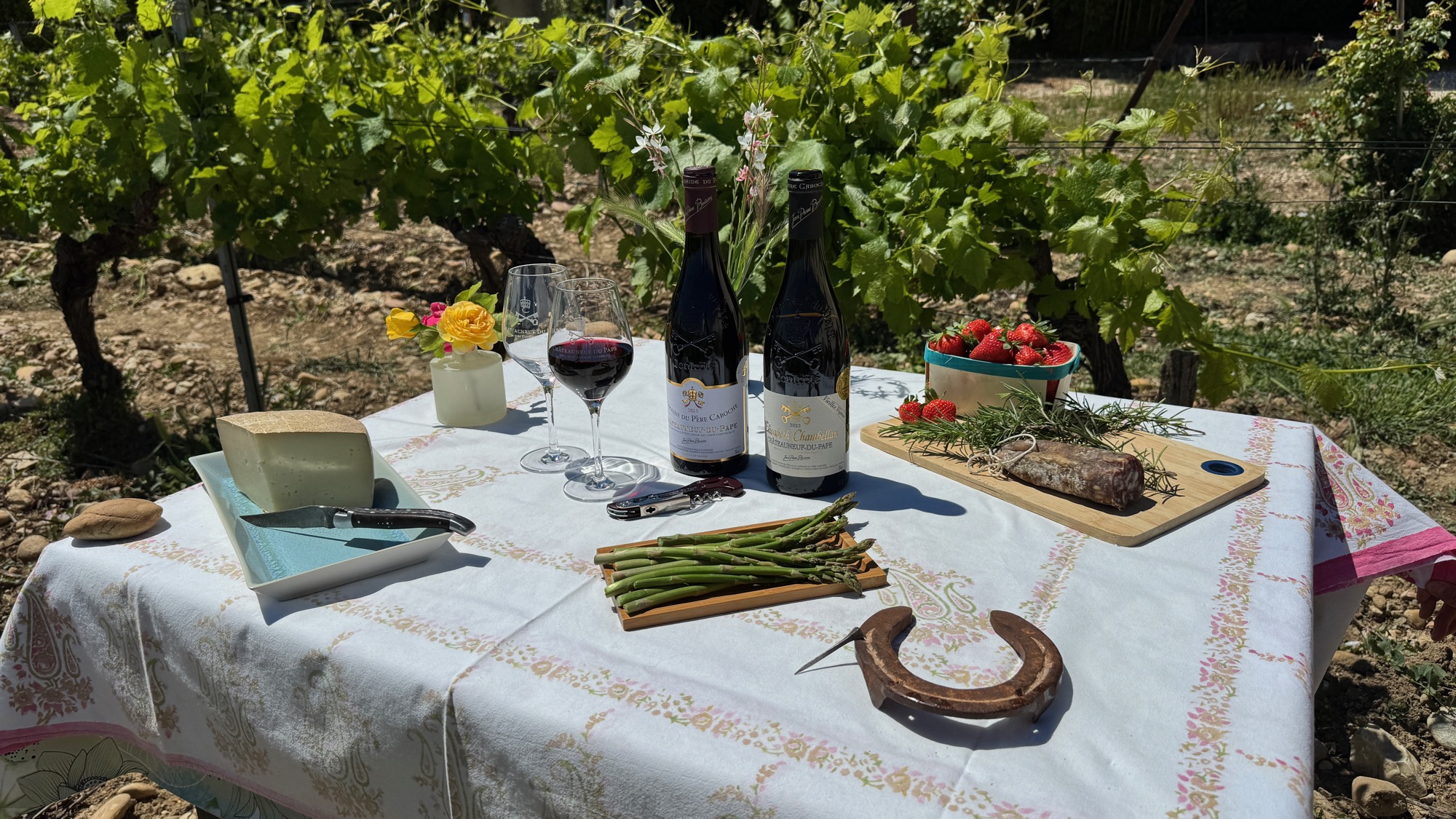
Eight cuvées across three appellations, from everyday drinking to fine dining
A simple and effective range
3 cuvées
Châteauneuf-du-Pape
Tradition red, Elisabeth Chambellan, Tradition white
2 cuvées
Côtes du Rhône
Domaine du Père Caboche, Château La Côte
3 cuvées
IGP Vaucluse, Le Petit Caboche
red, white, rosé
Critical acclaim, prestigious tables
Recognition and references
Consistent recognition in the international specialized press across our Châteauneuf-du-Pape range, and a presence on the finest tables, notably within the Accor group's luxury division.
Critical acclaim
- 95Jeb Dunnuck, Vieilles Vignes 2019
- 95Guide Dussert-Gerber, Elisabeth Chambellan 2023
- 94Wine Enthusiast, Tradition red 2017
- 94Decanter, Vieilles Vignes 2020
- 93Jeb Dunnuck, Tradition white 2021
Prestigious tables
- Hôtel Scribe Paris Opéra by Sofitel
- Hôtel Pullman Paris Tour Eiffel
- Hôtel Pullman Paris Montparnasse
- Sofitel Quiberon Thalassa
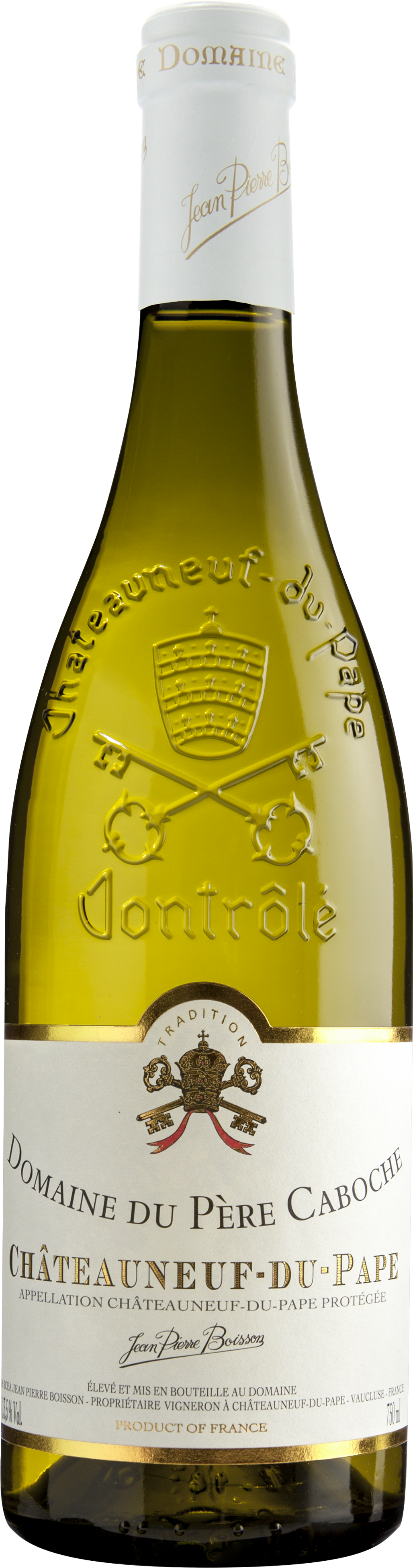
Châteauneuf-du-Pape
Tradition White 2025
Grape varieties
- ·Clairette 40% / Bourboulenc 30% / Grenache blanc 15% / Roussanne 15%
Terroir
- ·Pebbles from La Crau and Les Serres
Winemaking
- ·After hand-picking and sorting, the harvest is pressed immediately to free the juice, with no skin contact
- ·Fermentation in stainless steel at low temperature (16-18°C)
- ·Ageing on fine lees with regular stirring for a richer, fuller body — no oak
- ·13% Vol.
Tasting notes
- ·Bright, golden-yellow
- ·Nose: intense and fresh, delicate flowers (broom, elder flower, hawthorn), white-fleshed fruit (pear, white peach), enhanced by citrus notes and a subtle touch of ginger
- ·Palate: both generous, delicate and mineral, pear, vine peach, dried apricot, flinty notes, gentle citron nuances, long-lasting finish
- ·An elegant and full-flavoured wine
- ·Serve at 10-12°C
Awards
- ·Gold Medal : Concours Mondial des Féminalise 2026
- ·Gold Medal : Concours des Grands Vins de France 2026
Châteauneuf-du-Pape
Tradition White 2024
Grape varieties
- ·Clairette 40% / Bourboulenc 30% / Grenache blanc 15% / Roussanne 15%
Terroir
- ·Rolled pebbles of La Crau and Les Serres
Winemaking
- ·Hand harvest, direct pressing
- ·Stainless steel fermentation 16-18°C, ageing on lees with bâtonnage, no oak
Tasting notes
- ·Crystalline straw yellow with green reflections
- ·Nose: small flowers (broom, elderflower, hawthorn), peach and pear, apricot, pomelo zest
- ·Palate: fleshy, full, salivating, mineral tension, exotic touch, long finish
- ·Serve at 10-12°C
Châteauneuf-du-Pape
Tradition White 2020
Grape varieties
- ·Clairette 40% / Bourboulenc 30% / Grenache blanc 15% / Roussanne 15%
Terroir
- ·Rolled pebbles of La Crau and Les Serres
Winemaking
- ·Hand harvest, direct pressing
- ·Stainless steel fermentation at 16-18°C, no malolactic, ageing on lees with bâtonnage, no oak
Tasting notes
- ·Brilliant pale yellow with green reflections
- ·Nose: small white flowers, white peach, marshmallow, minerality
- ·Palate: full, fresh, long finish on citrus zest and minerality
- ·Serve at 10-12°C
Châteauneuf-du-Pape
Tradition White 2016
Grape varieties
- ·Clairette 40% / Bourboulenc 30% / Grenache blanc 15% / Roussanne 15%
Terroir
- ·Pebbles from La Crau and Les Serres
Winemaking
- ·Hand harvest and sorting, direct pressing
- ·Low-temperature stainless steel fermentation (16-18°C), no malolactic, ageing on lees, no oak
Tasting notes
- ·Bright gold with green highlights
- ·Nose: intense, refined white flowers and peach
- ·Palate: full and deep, white-flesh fruit, citrus, hints of exotic fruit
- ·Smooth, elegant and long finish
- ·Serve at 10-12°C
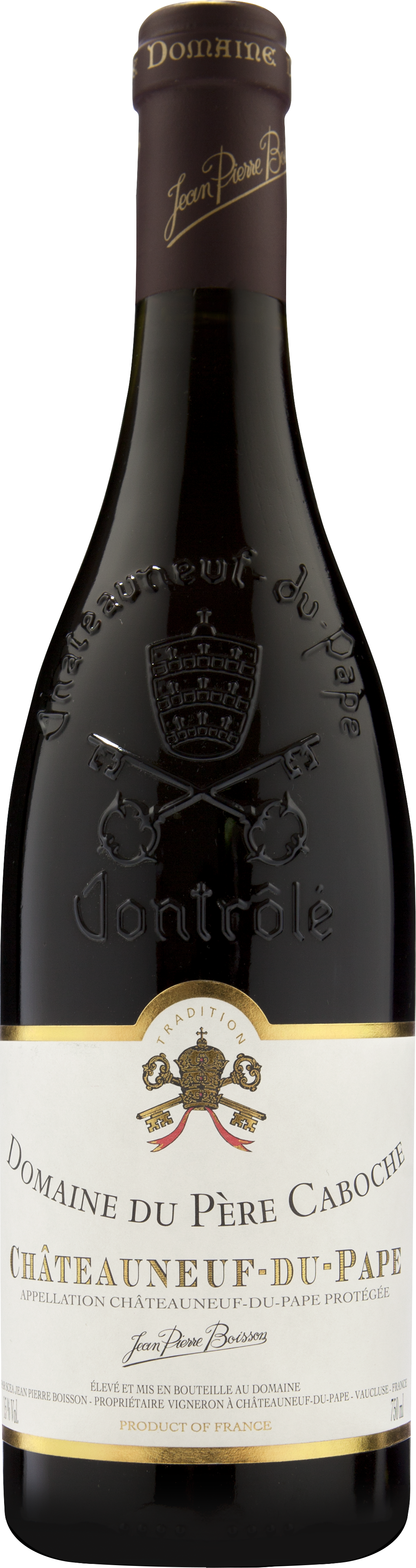
Châteauneuf-du-Pape
Tradition Red 2024
Grape varieties
- ·Grenache 80% / Syrah 15% / Mourvèdre 5%
Terroir
- ·The four main soils of the appellation: limestone, rolled pebbles, sandstone-clay and sand
- ·The most important: the famous La Crau plateau and its rolled pebbles, planted to Grenache
Winemaking
- ·Manual harvest, picked at full maturity and hand-sorted, destemmed according to variety and vintage, then crushed
- ·Permanent temperature control, taste-led maceration (about 1 month)
- ·After blending, ageing in oak foudres and stainless steel tanks
- ·14.5% Vol.
Tasting notes
- ·Deep red garnet with slight bluish hues
- ·Nose: generous and expressive — volume, richness and freshness, ripe black cherry, blackcurrant juice, garrigue
- ·Palate: full and velvety, blueberry, blackcurrant, fresh spices, a touch of sweet liquorice, hints of undergrowth, present yet well-integrated tannins, long finish
- ·A terroir-driven wine combining complexity, freshness and elegance, with a fine ageing potential
- ·Serve at 16-18°C
Awards
- ·16/20 : Jancis Robinson (Alistair Cooper MW)
- ·90-92/100 : Jeb Dunnuck 2025
- ·92/100 : Decanter (Matt Walls)
- ·Gold Medal : Concours Général Agricole 2026
- ·Gold Medal : Concours Mondial des Féminalise 2026
Châteauneuf-du-Pape
Tradition Red 2023
Grape varieties
- ·Grenache 80% / Syrah 15% / Mourvèdre 5%
Terroir
- ·The four main soils: limestone, rolled pebbles, sandstone-clay and sand
- ·La Crau plateau dominant
Winemaking
- ·Manual harvest, sorting, ~1 month maceration
- ·Ageing in oak foudres and stainless steel vats
- ·15% Vol.
Tasting notes
- ·Deep garnet red, slight bluish reflections
- ·Nose: ripe cherry, strawberry, blackcurrant juice, rosemary, Espelette pepper, chocolate, undergrowth
- ·Palate: full, velvety, gourmand fruit, sweet spices, liquorice, fine tannins
- ·Long, silky finish
- ·Serve at 16-18°C
Awards
- ·92/100 : Jeb Dunnuck 2025
- ·93/100 : Decanter (Matt Walls)
- ·94/100 : Guide Dussert-Gerber 2026
- ·Gold Medal : Vignerons Indépendants 2025
- ·Gold Medal : Concours Mondial des Féminalise 2025
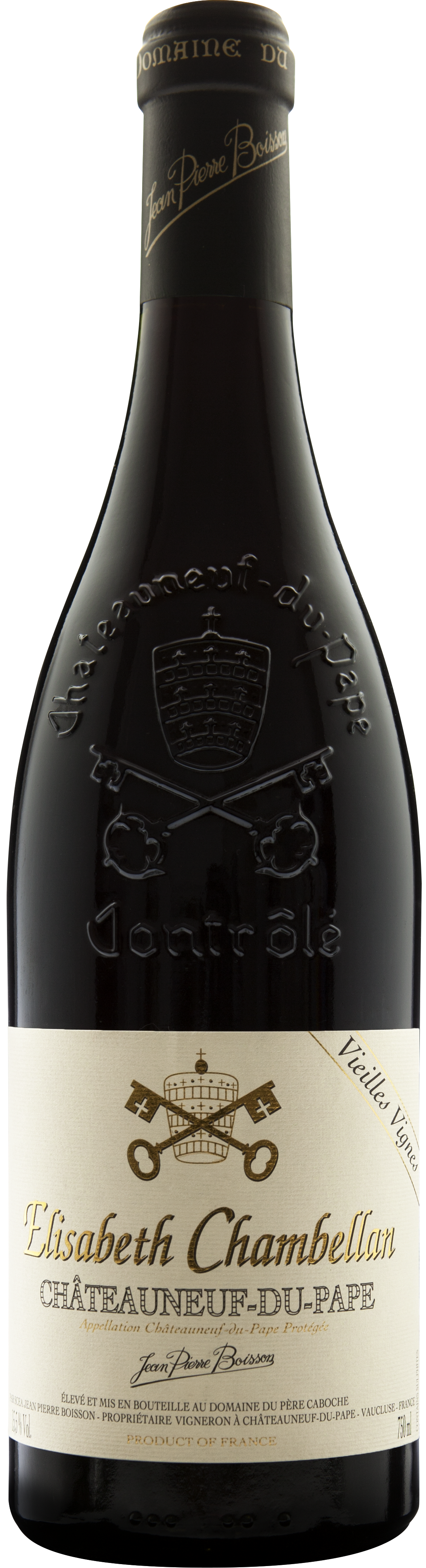
Châteauneuf-du-Pape, old vines
Cuvée Elisabeth Chambellan 2023
Grape varieties
- ·All 13 appellation grape varieties, from our very old vines
- ·Grenache 88% / Syrah 10%
- ·2% Mourvèdre, Cinsault, Clairette, Vaccarèse, Bourboulenc, Roussanne, Picardan, Counoise, Muscardin, Picpoul, Terret noir
- ·Vine age: 80–100 years
Terroir
- ·La Crau, rolled pebbles
Winemaking
- ·Harvested by hand from very old La Crau vines, picked at full maturity and hand-sorted
- ·Whole bunches crushed, temperature-controlled, taste-led maceration
- ·Half the blend aged in concrete vats, half in oak foudres, for about 12 months
Tasting notes
- ·Deep ruby red with bluish hues
- ·Nose: classy and complex, typical of the best Grenache terroirs on rolled pebbles — pure, dense and harmonious, ripe black fruits (black cherry, blackcurrant), soft spices (pepper, rosemary), undergrowth, leather, a touch of musk
- ·Palate: full-bodied with a lovely mineral tension, rounded, fleshy black fruit, soft liquorice, light tobacco, a hint of dark chocolate
- ·Dense and smooth tannins, ample and long finish — an outstanding balance between concentration, depth and elegance
- ·Serve at 18°C
Awards
- ·94/100 : Jeb Dunnuck 2025
- ·95/100 : Guide Dussert-Gerber 2026
- ·Gold Medal : Concours des Grands Vins de France 2025
- ·Gold Medal : Concours Mondial des Féminalise 2025
Châteauneuf-du-Pape, old vines
Cuvée Elisabeth Chambellan 2016
Grape varieties
- ·Grenache 88% / Syrah 10% / 2% Mourvèdre, Cinsault, Clairette and other appellation varieties
- ·Old vines, all 13 appellation grape varieties
Terroir
- ·La Crau, rolled pebbles
Winemaking
- ·Hand harvest, light crushing and destemming, temperature-controlled maceration (~1 month)
- ·14 months ageing: half concrete vats, half oak foudres
Tasting notes
- ·Deep ruby red with purple highlights
- ·Nose: classy, typical of the best Grenache terroirs on rolled pebbles, ripe blackcurrant and raspberry, several spicy notes
- ·Palate: powerful and voluptuous, fresh jammy black fruits, raspberry coulis, spices
- ·Very silky tannins, long and smooth finish — a wine with character
- ·Serve at 18°C
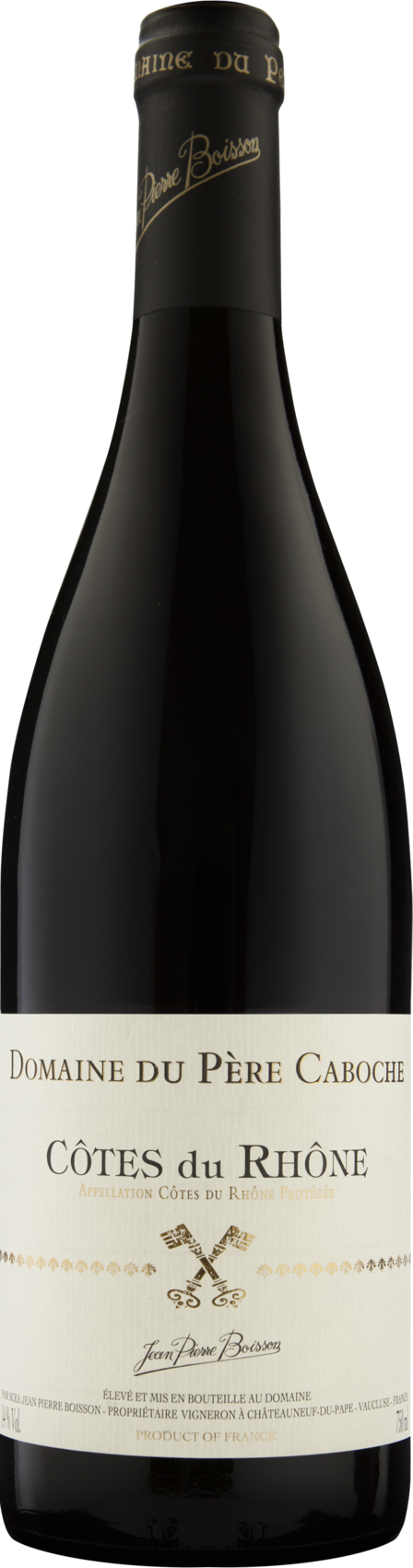
Côtes-du-Rhône
Domaine du Père Caboche Red 2025
Grape varieties
- ·Grenache 53% / Syrah 20% / Carignan 15% / Marselan 8% / Mourvèdre 3% / Cinsault 1%
Winemaking
- ·All grape varieties destemmed and lightly crushed
- ·Permanent temperature control, traditional maceration (about 14 days)
- ·Short ageing in stainless steel tanks to preserve the fruity potential
- ·14% Vol.
Tasting notes
- ·Garnet red
- ·Nose: intense and pure, red fruits (cherry, blackcurrant, strawberry), gentle spices (grey pepper), notes evoking Provence (fresh fig, garrigue-thyme, bay leaf), floral, undergrowth, violet, licorice, orange blossom
- ·Palate: generous and expressive, remarkable richness and finesse of tannins, supported by rare freshness and minerality
- ·A long and distinguished finish
- ·Serve at 16-18°C
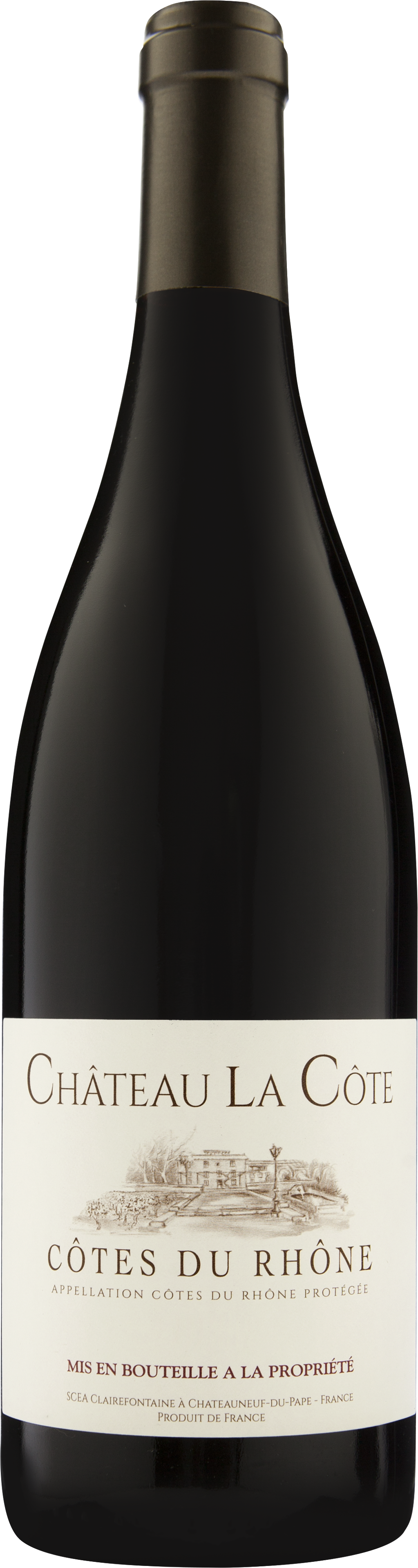
Côtes-du-Rhône
Château La Côte 2023
Grape varieties
- ·Grenache 60% / Syrah 25% / Carignan 15%
Terroir
- ·Clay soil covered with rolled pebbles
- ·Clairefontaine district, Pujaut heights
Winemaking
- ·Traditional vinification: destemming, crushing, 15-20 day maceration
- ·Stainless steel ageing
Tasting notes
- ·Brilliant garnet red
- ·Nose: garrigue (thyme, rosemary), juicy red and black fruits (cherry, blackberry, blueberry), toasted notes
- ·Palate: full, silky, fleshy fruits, sweet spices, undergrowth (moss, fern)
- ·Long finish on sweet liquorice and violet, melted tannins
- ·Serve at 16-18°C
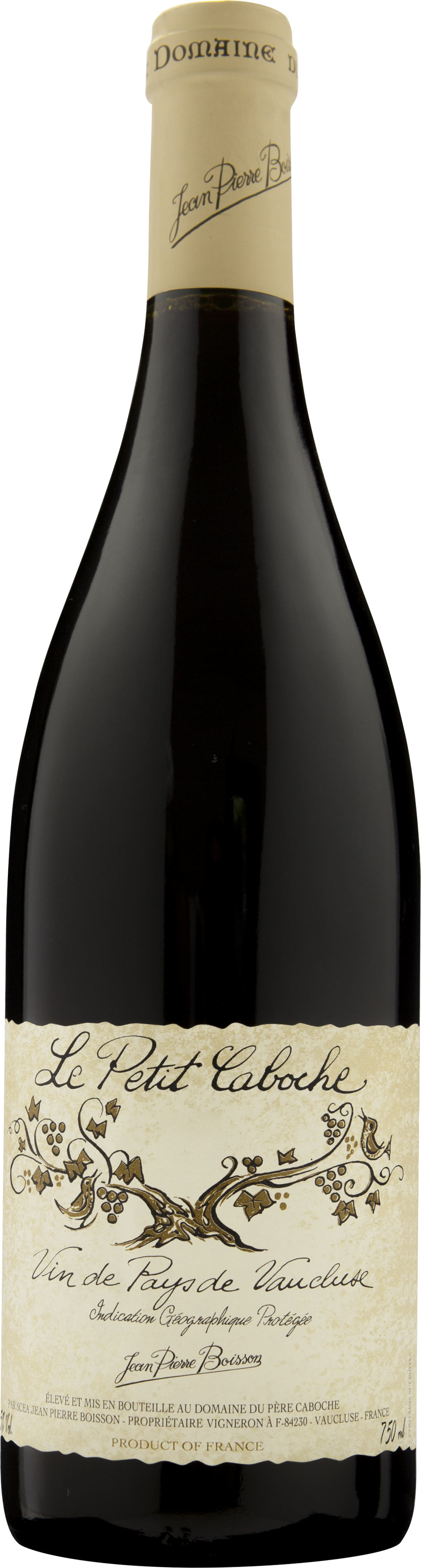
IGP Vaucluse, Le Petit Caboche
Vin de Pays Red 2024
Grape varieties
- ·Caladoc 40% / Marselan 30% / Egiodola 15% / Syrah 15%
Winemaking
- ·Grapes picked at full pulp maturity, traditional winemaking
- ·Permanent temperature control and limited oxygen during fermentation, to preserve freshness and fruit
- ·Early bottling
- ·14.5% Vol.
Tasting notes
- ·Deep ruby red with purple highlights
- ·Nose: intense, ripe red fruits and sweet licorice, lifted by hints of dried leaves and spices
- ·Palate: round, fleshy and ripe red fruit, soft well-rounded tannins
- ·Smooth finish with a touch of menthol — a wine of character, fruit and freshness, lovely to drink now
- ·Serve at 16-18°C
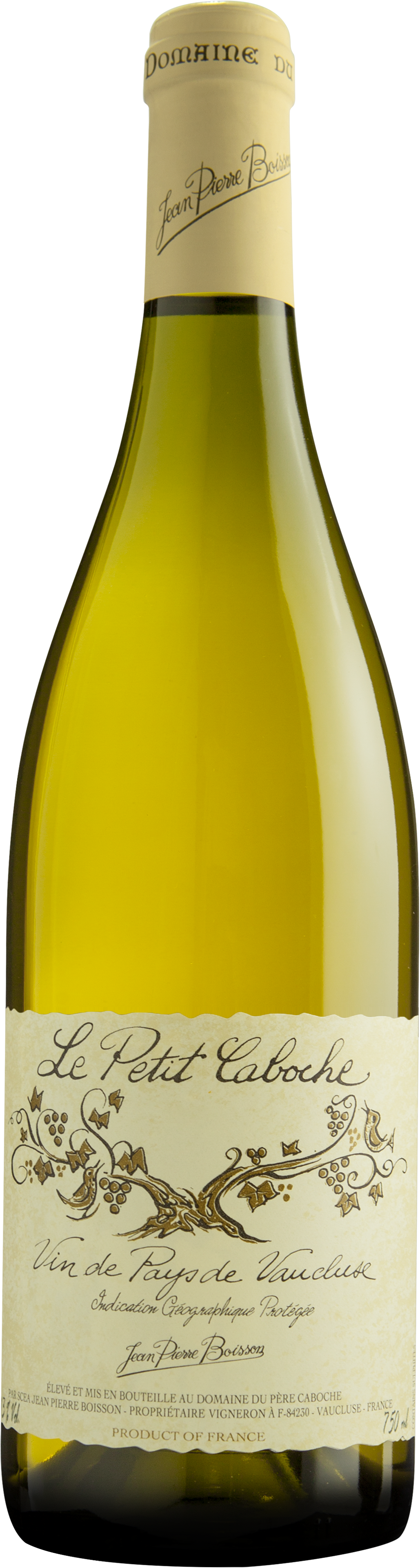
IGP Vaucluse, Le Petit Caboche
Vin de Pays White 2025
Grape varieties
- ·Sauvignon 100%
Winemaking
- ·Direct pressing of the grapes, fermentation after clarification at low temperature (16°C)
- ·Regular lees stirring, no malolactic fermentation
- ·Very early bottling so the wine keeps all its aromas and freshness
- ·13% Vol.
Tasting notes
- ·Bright, gold-yellow
- ·Nose: intense and fresh, explosive exotic fruits (pineapple, lychee, dragon fruit), elderflower syrup, subtle vegetal notes
- ·Palate: smooth and mineral, fruit flavours of the nose, fine citrus blossom and flinty notes
- ·A wide aromatic range, a pleasure wine pairing appeal and finesse, to drink young
- ·Serve at 8-10°C
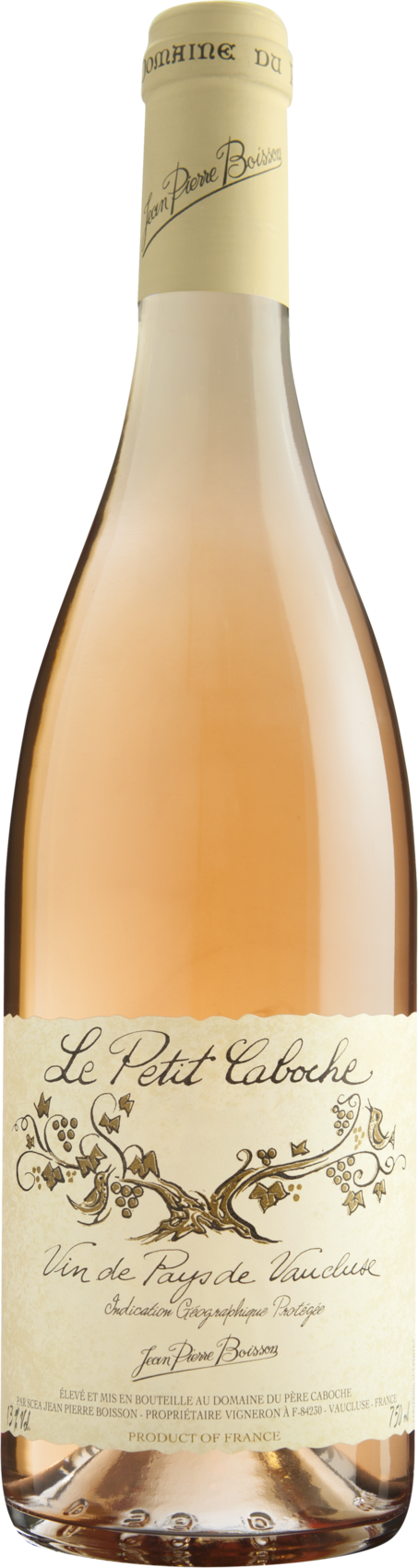
IGP Vaucluse, Le Petit Caboche
Vin de Pays Rosé 2025
Grape varieties
- ·Carignan 40% / Cinsault 30% / Caladoc 30%
Winemaking
- ·Direct pressing, fermentation of the clarified juice at low temperature (16°C)
- ·Regular lees stirring, early bottling to keep all the fruit and freshness
- ·12.5% Vol.
Tasting notes
- ·Bright, pale pink
- ·Nose: fresh and fruity, notes of redcurrant and raspberry
- ·Palate: a balance of richness and minerality, fleshy red fruits, candy-like aromas, a hint of white pepper
- ·A fresh, smooth finish reminiscent of pink grapefruit, all in finesse — a wine to drink young
- ·Serve at 8-10°C
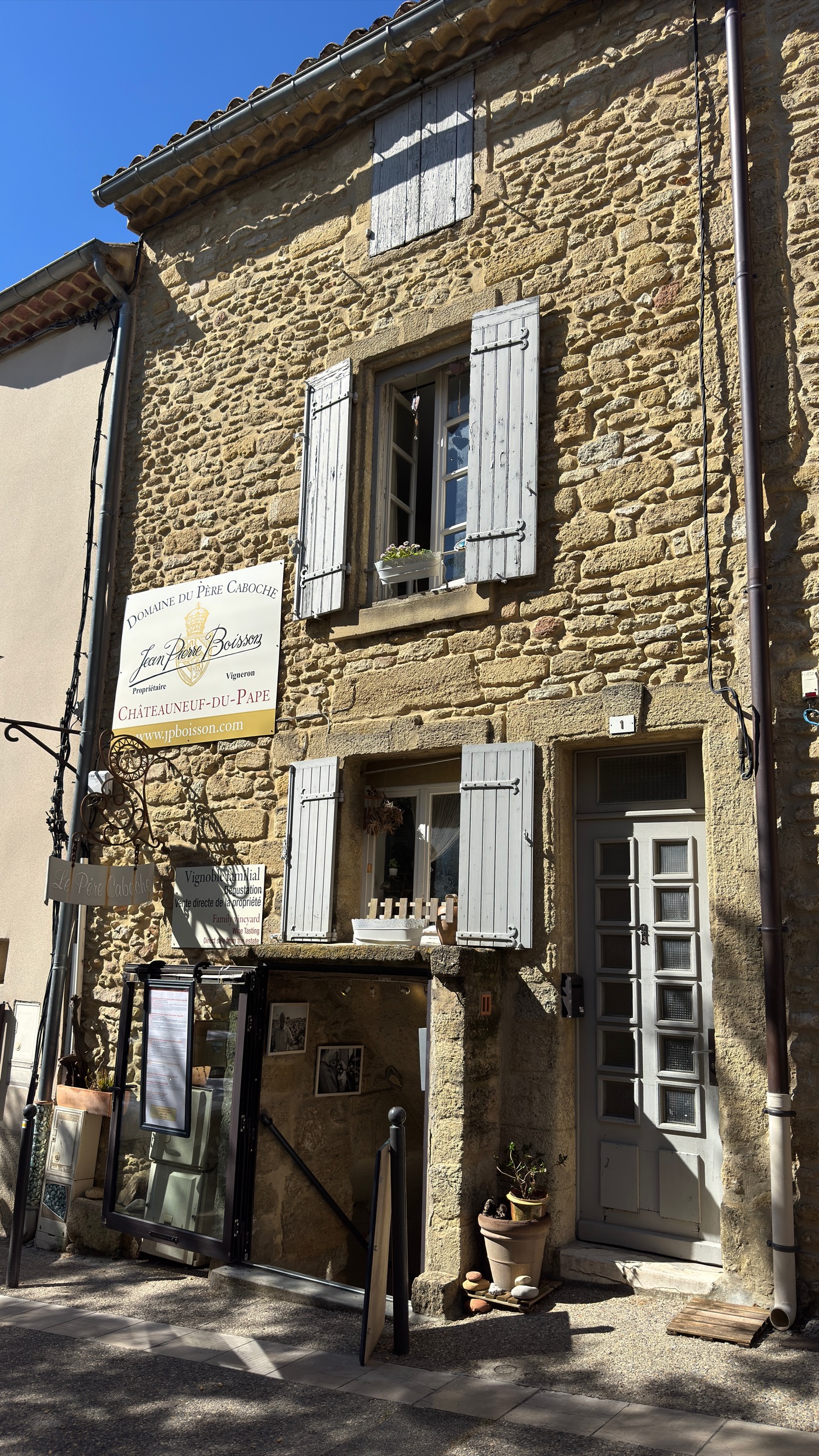
Domaine du Père Caboche Châteauneuf-du-Pape
Let’s come and visit us
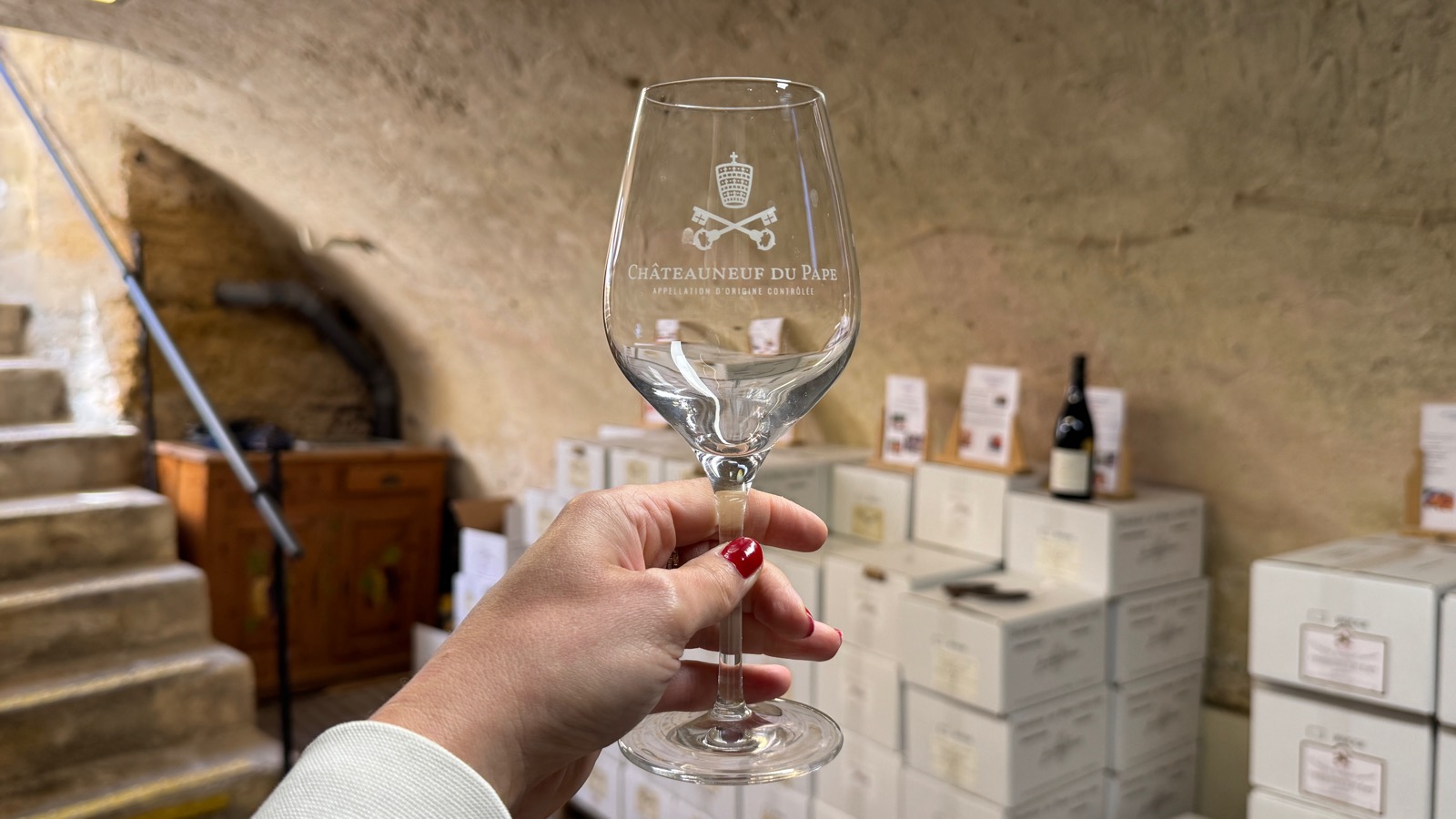
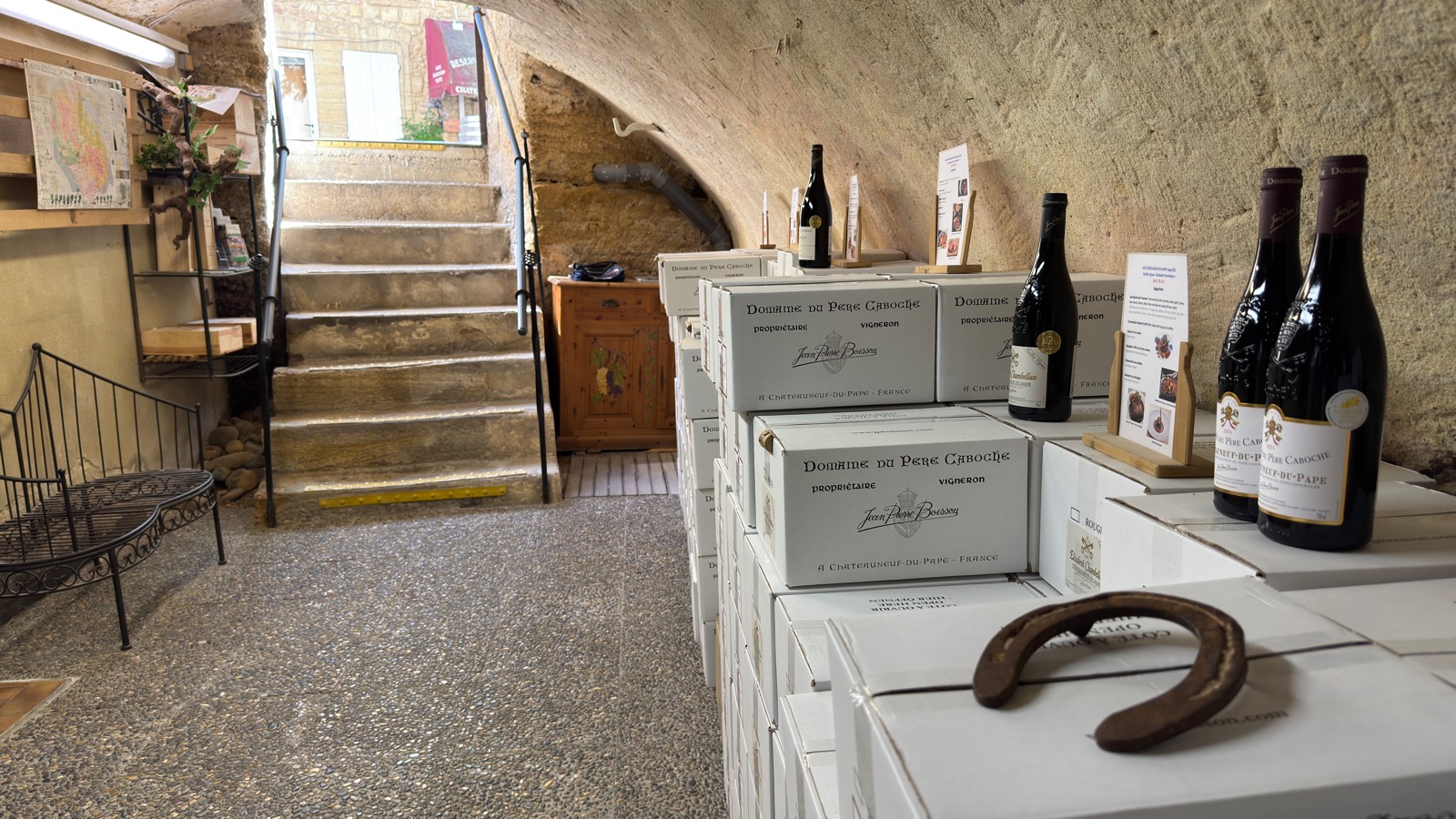
We will be delighted to welcome you to the Domaine for a tasting and discovery of our work in our seasonal boutique.
- Domaine du Père Caboche
- 5 impasse Martial Imbart
- F-84230 Châteauneuf-du-Pape
- +33 (0)4 90 83 71 44
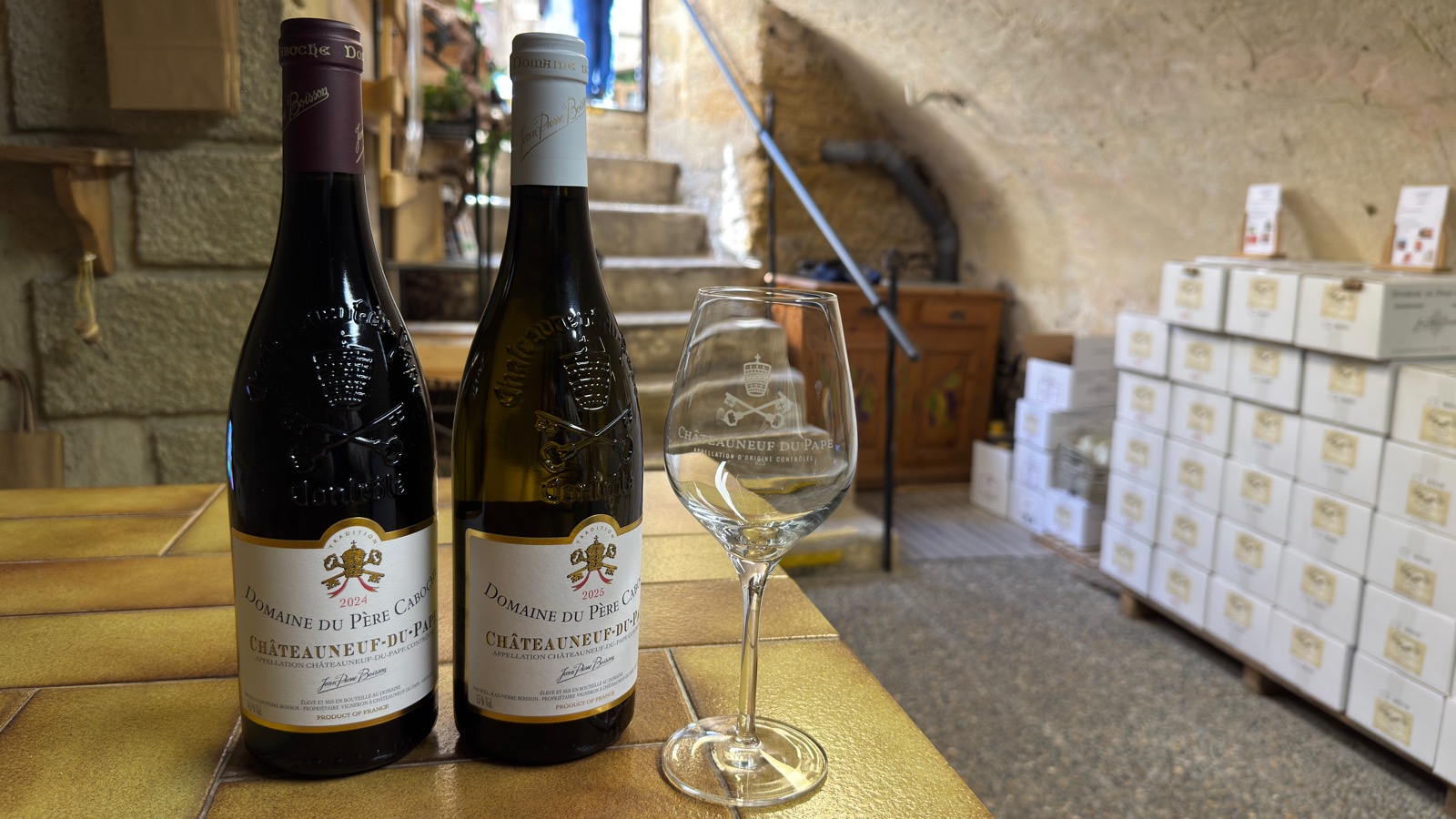
Thank you
A vineyard isn't something you own; it's something you pass on.
- Your contact: boisson@jpboisson.com